Kruger National Park packs about 148 mammal species, 546 bird species and 114 reptile species into 19,623 km² of savanna, riverine forest and mopane woodland. That's enough range that the Big Five checklist most visitors arrive with is really just the opening chapter. A lion pride can be dozing fifty meters off the tar road one morning; a leopard might slip into a drainage line before you've even focused the binoculars the next.
What follows is a rundown of what actually lives here, how common each animal really is, and where and when to look. The figures come from SANParks' own counts rather than marketing copy, so treat them as a planning tool, not a promise.
What Wildlife You Can Expect to See in Kruger
Kruger's species list runs to about 148 mammals, 546 birds, 114 reptiles, 49 fish and 34 amphibians, spread across a strip of bush 360 km long and up to 65 km wide in South Africa's Limpopo and Mpumalanga provinces. That scale matters: few African parks are large enough, or managed intensively enough, to hold viable populations of every Big Five species alongside cheetah, wild dog, hippo and crocodile in one ecosystem. It's the reason Kruger anchors the Kruger to Canyons biosphere rather than just another reserve on a map.
Expect elephant and buffalo on almost any multi-day visit, impala on every single drive, and reasonable odds at lion. Rhino and leopard take patience, and a handful of species, pangolin chief among them, elude most visitors entirely, guides included. Travelers short on time often lean on guided wildlife tours that know which loop roads have been producing sightings that week. The sections below move from the headline acts down to the animals only the sharpest-eyed self-drivers ever spot.
The Big Five: Lion, Leopard, Elephant, Rhino, Buffalo
Big-game hunters coined the term for the five animals most dangerous to hunt on foot. Kruger inherited it as a safari shorthand, but these are still the animals every first-time visitor asks about first, and reasonably so. This is one of the few parks where ticking off all five in a single trip is realistic, especially in the south.
Lion
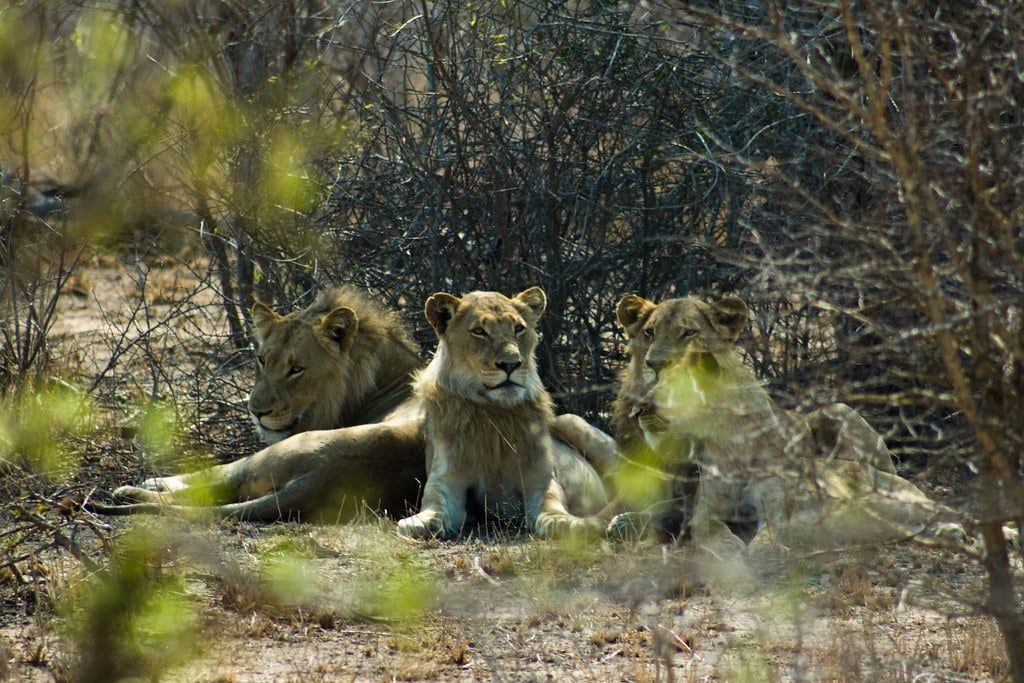
Around 1,500 lions live in Kruger, concentrated in the central and southern grasslands around Satara and along the Skukuza-Lower Sabie road. Prides can top 20 animals in prime lion country near Satara, and sightings rate as common rather than rare. Dawn drives along river roads are the best bet, when a pride that hunted overnight is often still lying up near a kill. A guided safari drive with a two-way radio network usually finds them faster than solo self-driving does.
Elephant
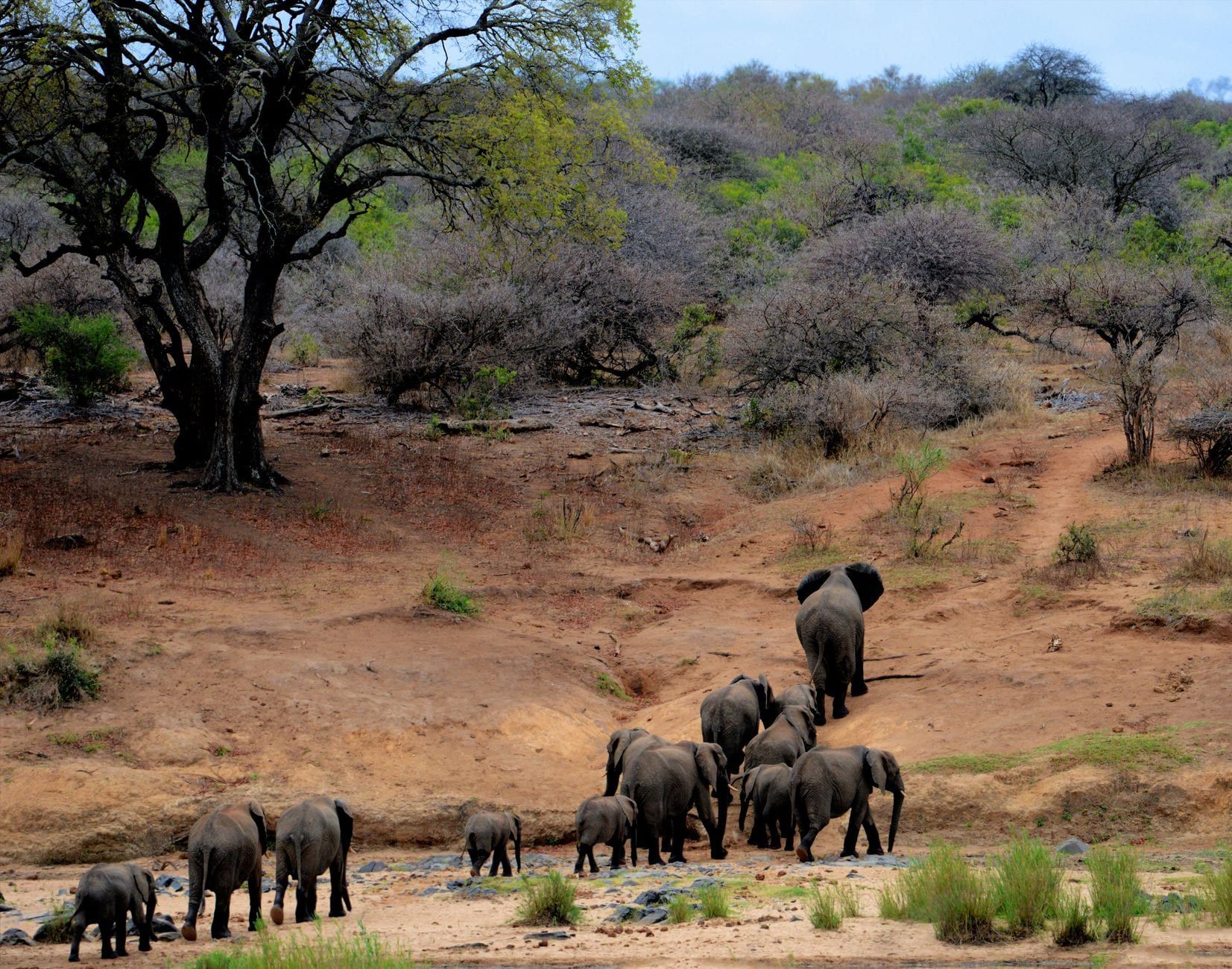
About 17,000 elephants move through the park in matriarch-led herds of roughly 30, gathering at rivers through the dry months. They're the animal you'll see most reliably outside impala, especially along the Sabie, Olifants and Letaba rivers. Bulls turn up almost anywhere, including strolling past rest camp fences at dusk.
Buffalo
Roughly 48,000 buffalo live here, in herds that can run to 200 animals on the open eastern plains. Old bulls pushed out of the herd, nicknamed dagga boys for their habit of wallowing in mud, travel alone or in small bachelor groups. Of the five, they have the reputation for being the most unpredictable when cornered.
Rhino
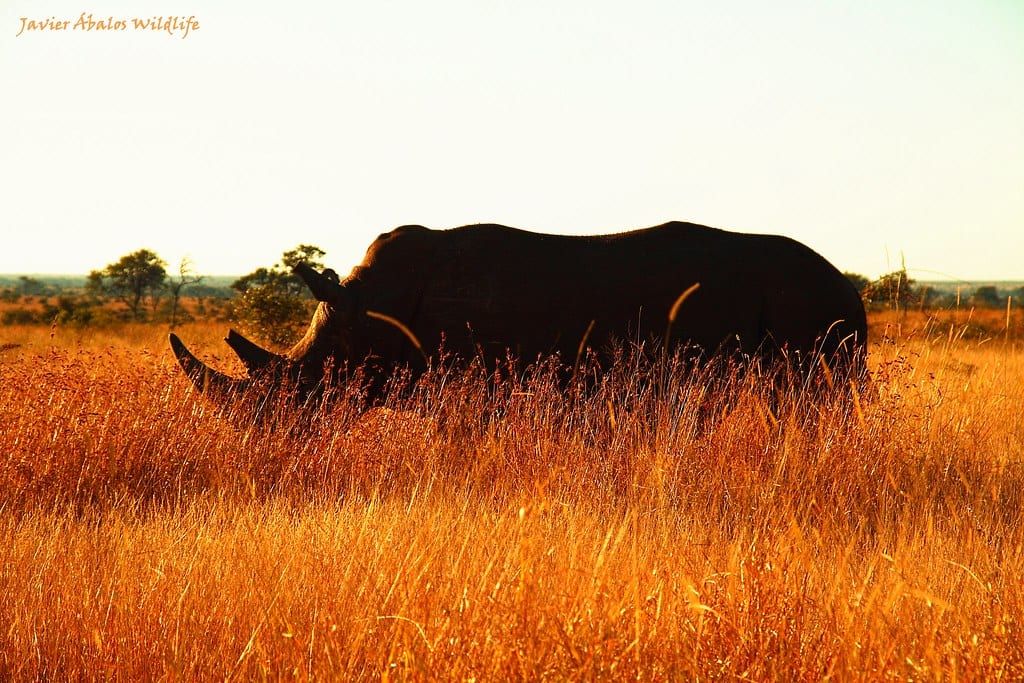
White rhino here form the largest single population left on the planet, estimated at around 8,000 despite sustained poaching pressure over the past decade. Black rhino are far scarcer, solitary browsers rather than grazers, and much harder to find. Sightings rate occasional for white rhino and rare for black, worth stating plainly rather than glossing over.
Leopard
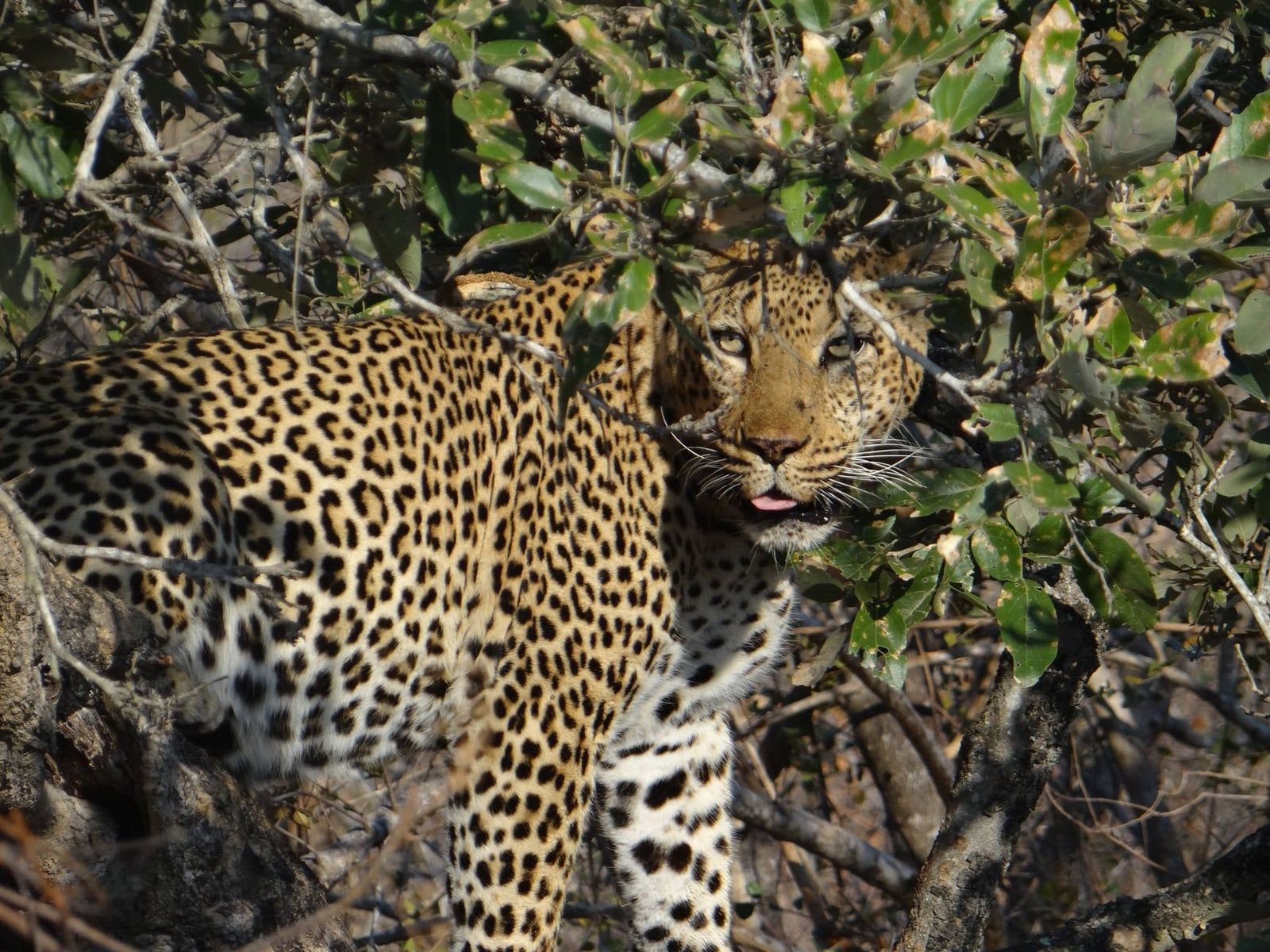
About 1,000 leopards live in Kruger, and they're the most elusive of the five: solitary, largely nocturnal, and expert at vanishing into riverine thickets by daylight. Best odds come from slow drives along rivers at dawn or dusk, scanning low branches for a tail hanging down. Sightings rate occasional, which in practice means patience over several days, not one lucky drive.
| Animal | Estimated population | Sighting frequency |
|---|---|---|
| Elephant | ~17,000 | Abundant |
| Buffalo | ~48,000 | Abundant |
| Lion | ~1,500 | Common |
| White rhino | ~8,000 | Occasional |
| Leopard | ~1,000 | Occasional |
Warthog, giraffe and zebra also rate abundant, though they're not part of the original five. More on them next.
Other Iconic Safari Animals
Beyond the five, a handful of species make up the rest of a first-timer's mental checklist. Some are near-guaranteed, others take real searching.
Giraffe and zebra
Kruger holds over 10,000 giraffe, most easily found browsing acacia around Lower Sabie and Satara, and Burchell's zebra roam in similar numbers across the same open country. The two often graze alongside wildebeest and impala, each species watching a different sightline for predators, an old bush habit that multiplies everyone's chance of spotting a stalking lion first.
Hippo and crocodile
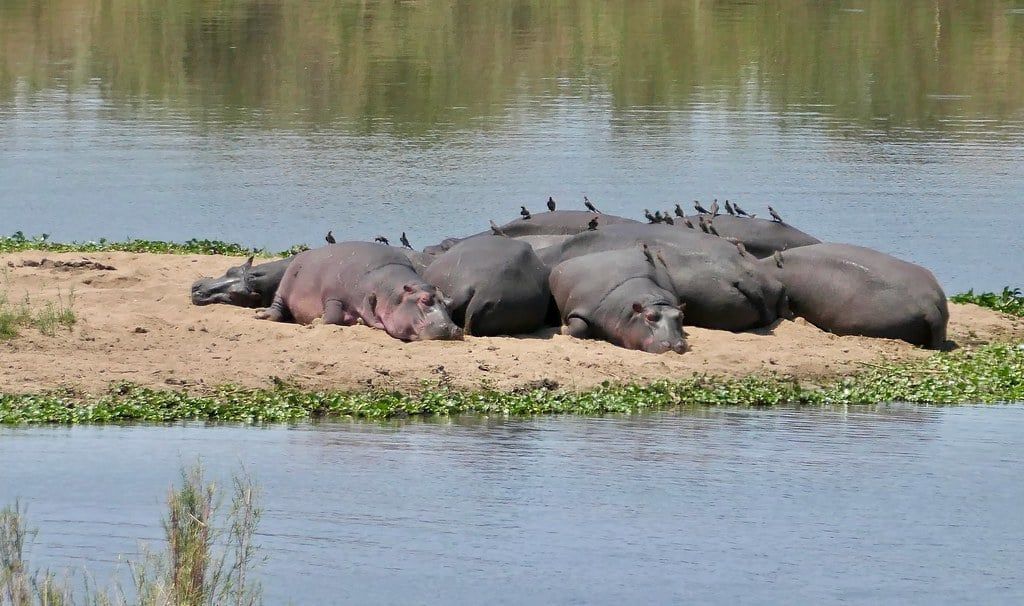
About 3,000 hippos pack into pools along the Letaba, Olifants and Sabie rivers, spending daylight mostly submerged before grazing onshore after dark. They're responsible for more human deaths in Africa than any other large mammal, so the fenced river viewpoints at camps like Lower Sabie are the sensible way to watch them, Sunset Dam among the best. Nile crocodiles share the same rivers and are common enough that a basking sandbank is a near-certain sight from most bridge crossings.
Cheetah and wild dog
Cheetah number only around 200 in the park, hunting by sight across open savanna in the central and southern regions, which makes them genuinely hard to find outside that terrain. African wild dogs are rarer still, an endangered species with just 150 to 300 individuals roaming in wide-ranging packs, most active in the cool of early morning. Neither species can be planned for with certainty. Travelers chasing them specifically often do better on a private guided safari built around tracking a particular predator rather than a fixed loop route.
Spotted hyena
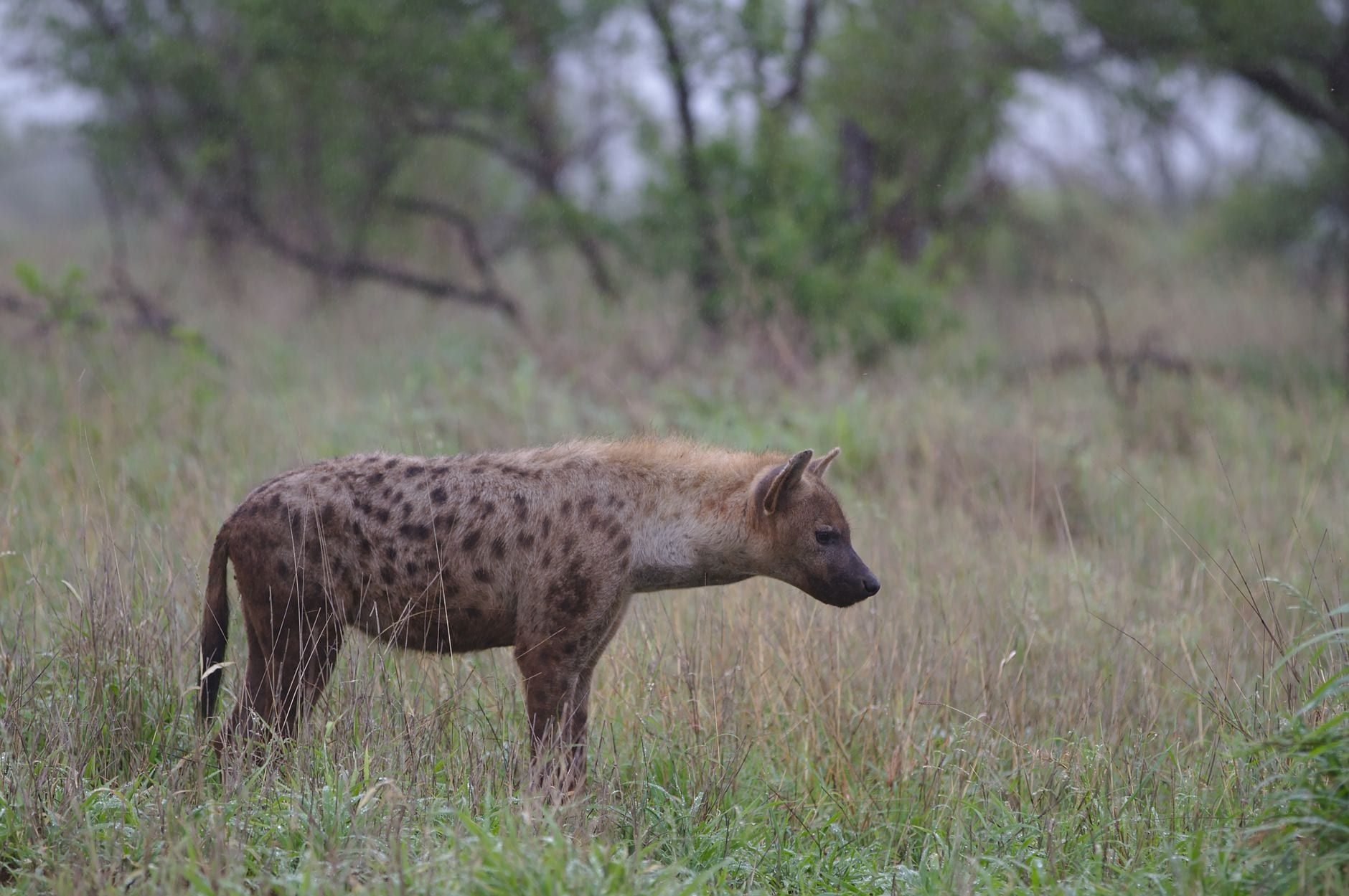
Spotted hyena are common and often heard before they're seen, their whooping calls carrying across camps after dark. They hunt as often as they scavenge, and a clan can push a lone lion off its own kill.
Plains Game and Antelope
Antelope are the ecosystem's backbone, the biomass that sustains every predator in the park, and impala alone account for a huge share of Kruger's herbivores.
Impala, kudu and the common browsers
Impala graze in herds of dozens along almost every road, and most visitors stop photographing them by day two. Greater kudu, waterbuck and nyala fill the browsing niche in thicker bush, told apart by the kudu bull's spiraled horns and the waterbuck's white rump ring. Bushbuck stay in dense riverine cover and are shyer, usually spotted alone at the forest edge rather than in herds.
Sable, roan, tsessebe and eland
These four grassland specialists are far scarcer than impala and stick to specific pockets, sable and roan particularly in Kruger's remoter central and northern sections. Numbers of both dropped sharply through the 1990s but have been recovering slowly since, according to SANParks' own population monitoring. Eland, Africa's largest antelope, and tsessebe, one of its fastest, both favor open grassland and reward a scan with binoculars rather than a fast drive-through.
Warthogs round out the everyday sightings, trotting off with tails raised like aerials whenever a vehicle slows down. They're common enough to rate abundant, right alongside impala.
Smaller Mammals, Primates and the Rarely-Seen Species
Not every animal worth seeing is large. Kruger's primates and small predators fill in the rest of a keen spotter's list, right down to species some guides never see in a career.
Baboons and vervet monkeys
Troops of chacma baboon forage along roadsides and around camp fences, often 20 or more animals moving together with juveniles riding on their mothers' backs. Vervet monkeys are smaller and quicker, common around picnic sites. Keep car windows shut, since both species have learned to raid unattended food.
Smaller predators
Black-backed jackal trot along roadsides at dusk, and brown hyena occasionally turn up in the drier west, both far less commonly seen than their spotted cousin. Genet, civet, caracal and African wild cat are nocturnal and rarely spotted on day drives, though a night drive out of a rest camp improves the odds.
The Secret Seven and the Little Five
Guides use Secret Seven for the species keen visitors chase once the Big Five are ticked off: aardvark, pangolin, serval, civet, honey badger, porcupine and African wild cat. The pangolin sits at the top of that list as the single hardest sighting in the park, some veteran guides go 15 years or more without seeing one in the wild. A lighter Little Five pairs names with the big originals, elephant shrew, leopard tortoise, antlion, red-billed buffalo weaver and rhinoceros beetle, a fun scavenger hunt for kids on a long drive.
Birds, Reptiles and Other Wildlife
Mammals get the attention, but birds and reptiles make up most of Kruger's species count, 546 bird species and 114 reptile species between them, more than double the mammal tally combined.
The Big Six birds
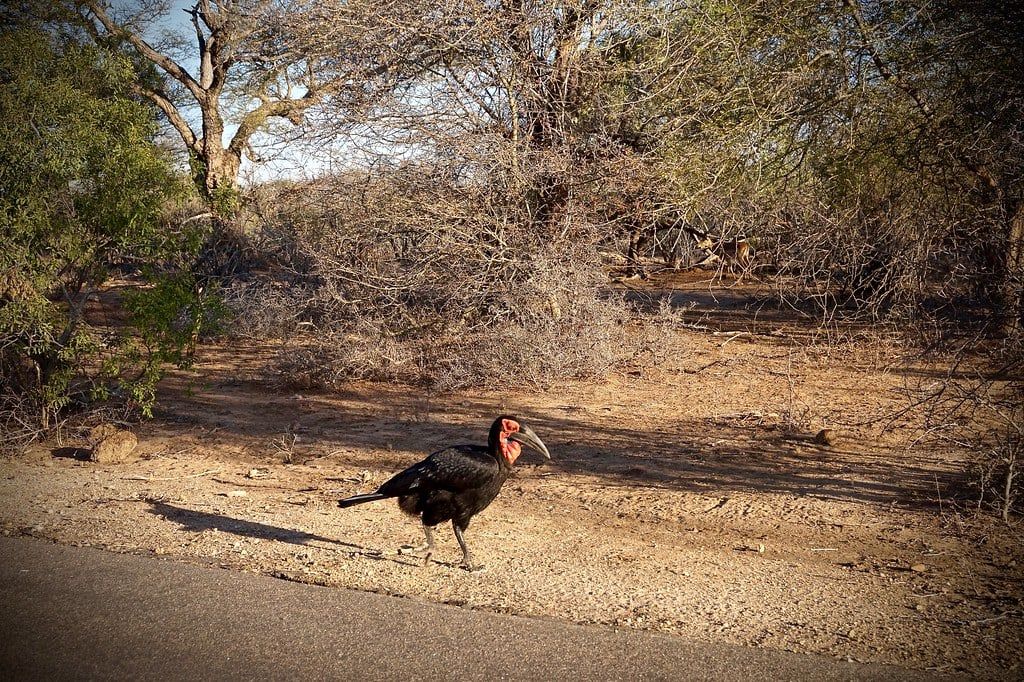
Birders chase their own version of the Big Five: martial eagle, lappet-faced vulture, Pel's fishing owl, saddle-billed stork, kori bustard and southern ground hornbill. Pel's fishing owl is the toughest of the six, restricted to thick riverine forest, while ground hornbill turn up walking the roadside in family groups almost anywhere in the park. Birdlife peaks in the northern Pafuri region, where fig and fever tree forest along the Luvuvhu River holds species found nowhere else in Kruger.
Nile crocodile and other reptiles
Nile crocodile is the dominant reptile predator, abundant in the Sabie, Olifants and Letaba rivers and easy to spot basking on sandbanks. Numbers have actually fallen since a high point in the late 1990s, a decline SANParks links to changes in river conditions that affected the crocodiles' diet. Rock python, monitor lizards and a range of smaller lizards and snakes round out the reptile list, though most stay hidden during the heat of the day.
Where and When to See the Most Animals
Timing changes everything in Kruger, more than any other single choice in this guide.
Dry season versus wet season
May to September, the dry winter months, is by far the best window. Thinning bush strips away cover and animals cluster at the shrinking number of rivers and waterholes still holding water. September often gets singled out as ideal, since mornings are milder than the cold snaps of June and July while game is still concentrated before the first rains. November through March brings dense green vegetation that hides animals, plus heat, humidity and the peak malaria season, harder going for pure game viewing, though newborn impala and migrant birds are a summer trade-off.
Dawn and dusk
Predators do most of their hunting and moving in the cooler hours, so drives timed around gate opening and closing consistently outperform a midday loop. Check current gate times and entry fees before you travel, since both shift month to month and a late return after closing can mean a fine.
South versus north Kruger
Southern Kruger, around Skukuza, Lower Sabie and Berg-en-Dal, has the highest game density and the best odds of a Big Five day. The trade-off is more vehicles at popular sightings. Northern Kruger, beyond Olifants and up toward Pafuri, sees a fraction of the traffic, trades some game density for the park's best birding and its famous giant tusker elephant bulls, and suits travelers who'd rather have a herd to themselves than tick boxes fast. Fence removal between western Kruger and neighboring private reserves has also opened up migration routes in recent years, spreading animals more widely across the wider ecosystem in summer.
Guided or self-drive
A standard sedan handles Kruger's tar and gravel roads fine, but a guided drive with a trained ranger reads tracks, calls in sightings by radio, and gets closer on a bush walk than any vehicle can. A short 3-day safari or a longer guided trip from Johannesburg packs in more productive drive hours than most people manage solo on a first visit. Self-driving suits repeat visitors who already know the roads; first-timers get more animals per day with a guide.
Frequently asked questions
What animals is Kruger National Park famous for?
Kruger is best known for the Big Five: lion, leopard, elephant, rhino and buffalo. It's also a stronghold for cheetah, African wild dog, giraffe, zebra and over 500 bird species, which is why it draws serious birders as well as first-time safari-goers.
How many animal species live in Kruger National Park?
Around 148 mammal species, 546 bird species, 114 reptile species, 49 fish species and 34 amphibian species live in the park, alongside more than 330 tree species.
What is the best time of year to see animals in Kruger?
The dry winter months, roughly May to September, are best. Thinning vegetation and shrinking water sources force animals into the open near rivers and waterholes, and September is often the sweet spot before the rains return.
Are lions easy to see in Kruger National Park?
Yes. About 1,500 lions live in the park and sightings rate common, especially in central and southern grasslands around Satara and along roads like Skukuza-Lower Sabie.
How rare is it to see a leopard in Kruger?
Leopards are the toughest Big Five member to find, with about 1,000 in the park. They're solitary, nocturnal and expert at staying hidden in riverine bush, so sightings rate occasional rather than common. Dawn drives along rivers give the best odds.
Are there cheetahs and wild dogs in Kruger?
Yes, but both are rare. Roughly 200 cheetah hunt the open grassland of central and southern Kruger, and 150 to 300 African wild dogs, an endangered species, roam widely in packs. Neither can be reliably planned for on a single visit.
What is the rarest animal to spot in Kruger?
The pangolin is widely considered the rarest sighting in the park; some veteran guides go 15 years or more without seeing one in the wild. Aardvark, serval and honey badger are also very hard to find.
Is it possible to see the Big Five in one trip to Kruger?
Yes, and Kruger is one of the few African parks where it's genuinely realistic, especially with several days in the south where game density is highest. Elephant and buffalo are close to guaranteed; rhino and leopard take more patience and a bit of luck.