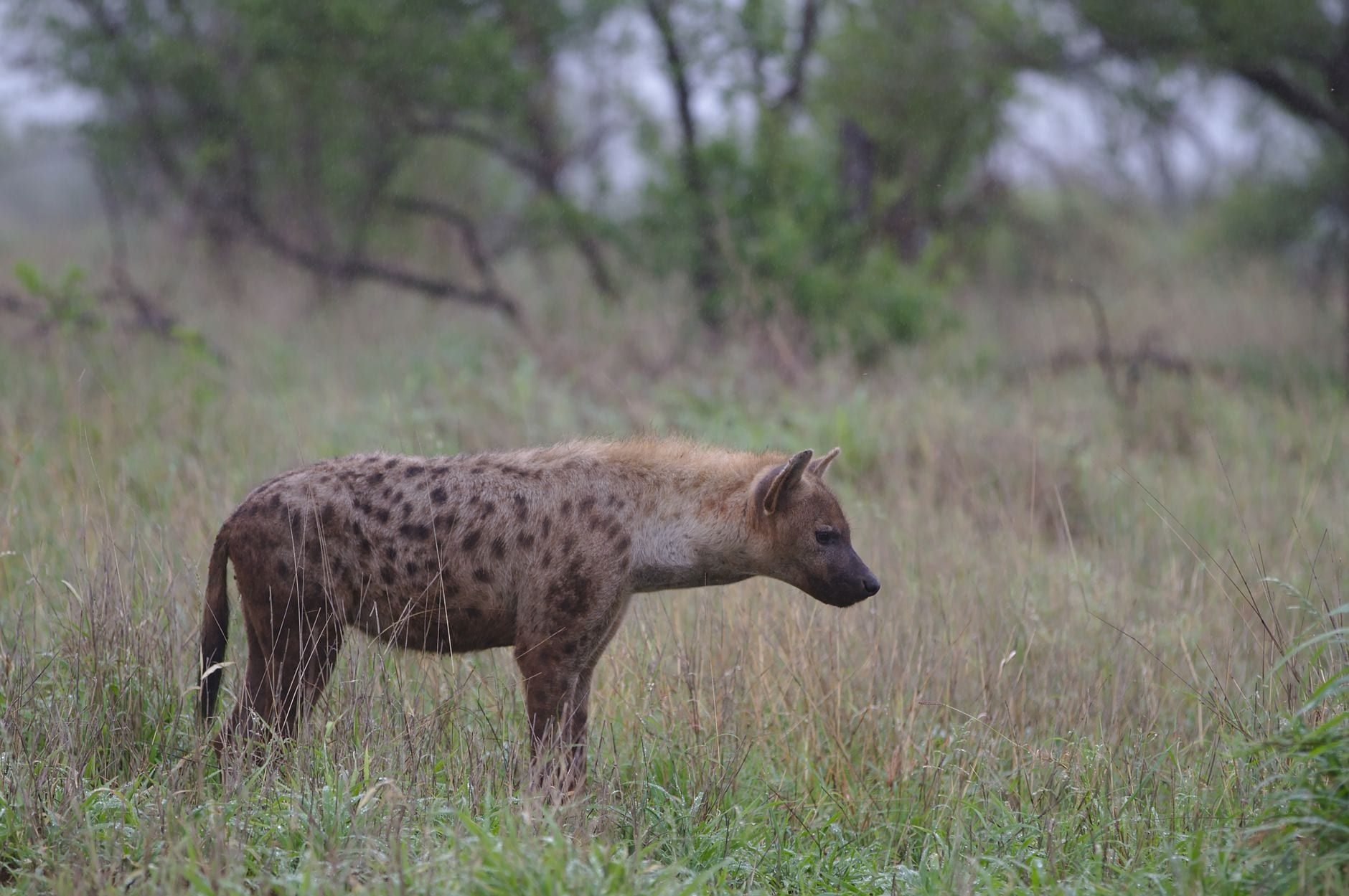
Kruger National Park spreads across 19,623 km² of Limpopo and Mpumalanga, and where you sleep inside that space changes the whole trip. A rest camp bed puts you on the road inside the gates at first light, self-catering, for a fraction of a lodge rate. A private lodge bed puts you on a leopard sighting after dark with no other vehicle in sight. Neither choice is wrong, but picking blind usually means overpaying for a product you didn't actually want.
This guide breaks Kruger accommodation into the four products that really exist, with named camps, named lodges, and prices in both currencies, so you can match the trip to the traveler before touching a booking page.
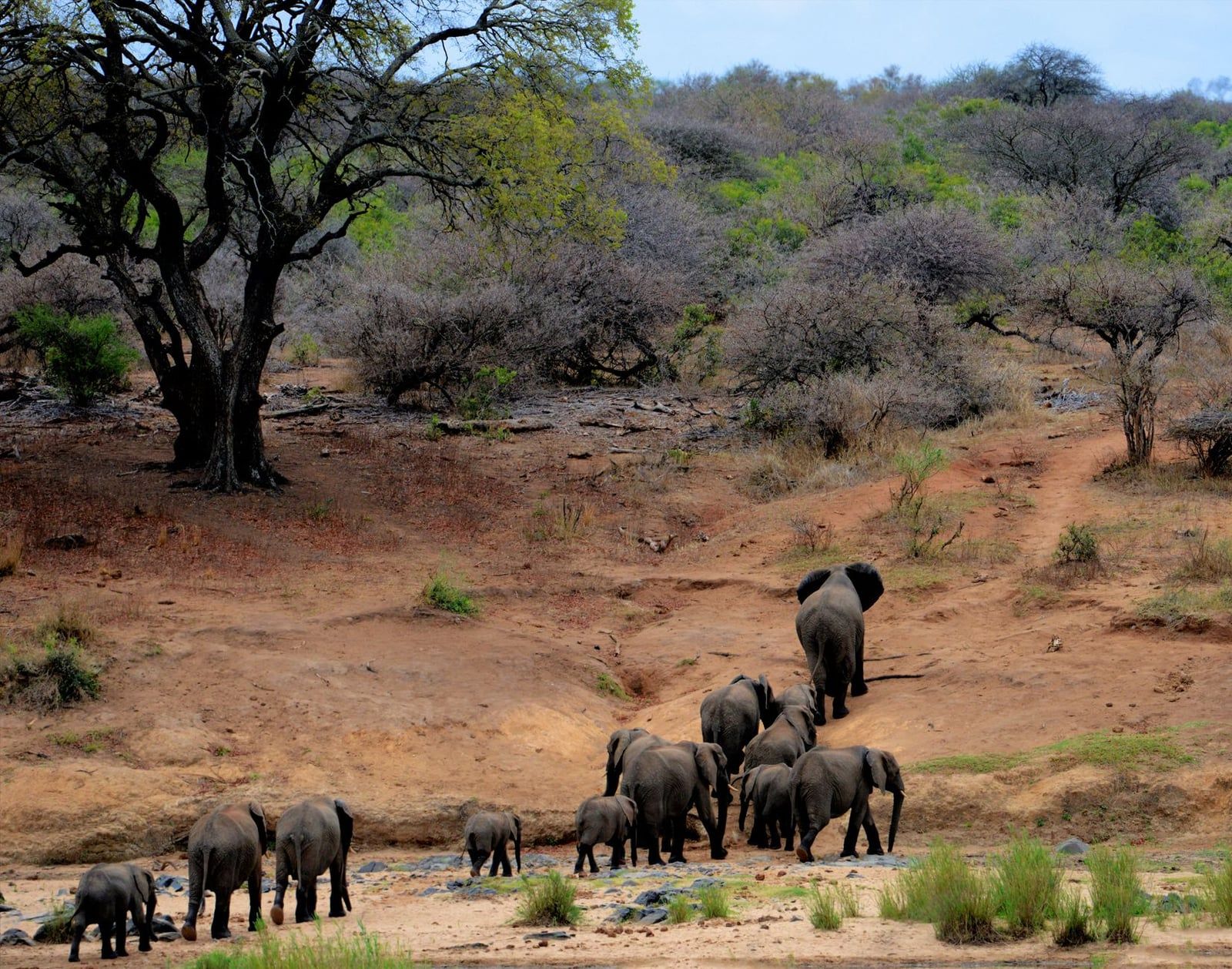
The Four Ways to Sleep in Kruger
Kruger's 19,623 km² (7,576 sq mi) footprint, stretching 360 km north to south, holds four genuinely different accommodation products, and the terms overlap enough to confuse first-time bookers. A rest camp is a SANParks-run, self-catering camp inside the park's fence, where you drive yourself between fixed gate times. A private concession is also inside the park boundary, on land SANParks leases out, but it comes fully inclusive with a private guide and no other traffic on its patch of bush. Step outside the fence and you're in the Greater Kruger - reserves like Sabi Sand or Timbavati that share an unfenced boundary with the park, so lion and elephant move between the two freely. Furthest out sit the gate towns - Hazyview, Hoedspruit, Komatipoort - where hotels and guest houses put you a drive away from the nearest entrance.
The trade-off underneath all four is the same one: self-catering and self-drive buy affordability and flexibility, fully-guided buys exclusivity and comfort. Sleeping inside the fence means you're already on the road when gates open at 05:30 (or 06:00 in the cooler months) - the best hour for predators to be moving. Sleeping outside costs you that hour and the one before gate closing, but rest camp beds and gate-town rooms cost a fraction of a private lodge's per-person rate. For the park's history and layout before you commit to a camp, our Kruger National Park guide is a useful starting point.
SANParks Rest Camps: Types, Best Camps and Facilities
A rest camp bed comes in six basic forms, cheapest to priciest: camping sites, rustic huts with shared ablutions, safari tents, en-suite bungalows, self-catering cottages, and multi-room guest houses or family cottages sleeping six or more. All are self-catering - bring or buy your own food - and every main camp has at least a small shop and a communal kitchen for the cheaper units.
SANParks runs 12 main rest camps plus smaller satellite camps (no reception or shop of their own, booked through a nearby main camp), remote bushveld camps capped at a few dozen beds, a handful of exclusive-use bush lodges, and several overnight hides where you sleep beside a floodlit waterhole. That range means a first-timer and a visitor chasing solitude can both stay inside the same park without seeing much of each other.
In the south, Skukuza is Kruger's biggest camp and its administrative headquarters, built to sleep up to 1,000 guests with three swimming pools, a filling station, a laundromat and an unfenced nine-hole golf course. It's less a camp than a small town, and the scale means you won't run out of things to do on a rained-out afternoon. Lower Sabie, southeast of Skukuza, is smaller and better placed for game: Sunset Dam sits five minutes from camp and reliably delivers hippo, crocodile and elephant right from the roadside at dusk. Berg-en-Dal and Pretoriuskop round out the south, both solid picks for families with pools and short drives to the nearest gate.
Satara, out on the central grassland, is Kruger's lion camp - prides of 20 or more turn up on the surrounding plains often enough that regulars build a whole itinerary around a Satara stay. Letaba, further north, holds the Elephant Hall museum, with tusks from Kruger's legendary 'Magnificent Seven' giant tuskers. Olifants sits on a bluff over its namesake river with some of the best camp views in the park, while Shingwedzi and Punda Maria cover the quieter far north and Crocodile Bridge sits in the southeast near the Mozambique boundary.
Expect camping from about $24-$43 (R390-R700) a night, shared-facility huts and safari tents from $37-$99 (R600-R1,600), en-suite bungalows and cottages from $90-$215 (R1,500-R3,500), and family units or guest houses from $215-$530 (R3,500-R8,600). Rates are per unit, not per person, which makes rest camps the one Kruger product where a group of four often pays less per head than a couple does. Self-drive is restricted to tar and maintained gravel at 50 km/h and 40 km/h respectively - no off-roading - and if you want a guided element without switching to a lodge, most camps run their own night drives and guided walks, or you can add one through a wildlife-focused tour before you arrive.
Private Concession Lodges Inside the Park
A concession lodge sits inside Kruger's official boundary on land SANParks leases to a private operator, a different product from both a rest camp and a Greater Kruger lodge. You're still technically inside the national park, but the rate includes meals, twice-daily guided game drives, and traversing rights over an exclusive stretch of bush that self-drivers never enter. Off-road driving and drives after the public gate-closing time are both allowed here - that's the whole point of the premium.
SANParks lists 12 lodges operating under this model, among them Jock Safari Lodge, Hoyo Hoyo Safari Lodge, Singita Lebombo and Singita Sweni, Lion Sands, Kruger Shalati (built on a repurposed train bridge over the Sabie River), Rhino Walking Safaris, Imbali Safari Lodge, Lukimbi, Shishangeni Lodge, Hamiltons Tented Camp and two Kruger Untamed camps. Each is small by design - most run under 20 rooms - so vehicle numbers at any sighting stay low.
The newest addition, Skukuza Safari Lodge, breaks that small-and-exclusive mould: it's a 128-unit property with 87 standard rooms, 20 family rooms and 13 wheelchair-accessible universal rooms, a hybrid between concession comfort and rest-camp scale. Pricing across the tier starts around $650 per person sharing at the entry end (Hoyo Hoyo, roughly R10,500) and climbs past $1,100 per person at Jock Safari Lodge (about R18,500), where the exclusive-use villa alone runs near R92,400 a night. If a concession stay is the plan, book it through a private safari tour that can build transfers and drives around it.
The Greater Kruger: Private Reserves Outside the Fence
Greater Kruger describes the private reserves running along Kruger's western boundary that dropped their fences with the park - Sabi Sand, Timbavati, Klaserie and Thornybush among them - so wildlife crosses freely between reserve and national park with no barrier at all. Thornybush only removed its fence in 2017; Sabi Sand's boundary has been open for decades. Wildlife doesn't recognize the property line, so a lodge here delivers the same lions and elephants as a Kruger concession, often at closer range.
The trade-off for staying outside SANParks' own jurisdiction is that reserves set their own rules, generally looser: no day visitors, no self-driving, but off-road pursuit and night drives are standard. Sighting etiquette differs by reserve too - Sabi Sand generally caps a sighting at three vehicles (no cap at all at MalaMala or Londolozi), while Timbavati and Klaserie hold to two.
Sabi Sand is the reserve to pick for leopard sightings, the product of decades of habituation work by lodges like MalaMala and Londolozi. Timbavati is known for its white lions and dense general game. Klaserie runs lower density and a lower profile - fewer lodges, more space, less polish. Thornybush sits closest to Hoedspruit's airport and markets itself hardest at families, with shorter transfer times than the others.
Standard lodges here (Shindzela, Elephant Plains) sit at the lower end of the pricing scale; superior properties (Jock, Hamiltons Tented Camp) add space and design; the luxury tier (MalaMala Camp, Sabi Sabi Earth Lodge) tops it out. Expect all-inclusive rates from roughly $650 to $2,000+ per person sharing per night, broadly matching Kruger's own concessions but with a wider spread of properties to choose from. Anyone building a trip around big-cat sightings rather than a boundary technicality should treat Greater Kruger lodges and Kruger concessions as one shopping list - our safari tour options cover both.
Staying Outside the Gates: Gate Towns and the Full Cost Comparison
Basing yourself outside the park entirely, in a gate town like Hazyview, Hoedspruit or Komatipoort, trades game-drive hours for space and value. Hazyview hotel rooms start around $90-$100 a night; the Kruger Gate Hotel, right at Paul Kruger Gate, runs closer to $274 (R4,445) for the convenience of a short drive in. Families who want a proper pool, a full menu and a lawn for kids to run on tend to do better here than squeezed into a rest camp bungalow.
The cost is time. Entrance gates open at 05:30 from October to March and 06:00 from April to September, and close anywhere from 17:30 (May-July) to 18:30 (November-February) depending on the month - arrive at an exit gate after closing and you risk a fine. Staying outside means driving in after the gate opens and leaving before it shuts, which erases the two best game-viewing windows of the day. Check current Kruger opening hours and entry fees before planning a day trip in, since the schedule shifts through the year.
Every visitor pays a daily conservation fee on top of accommodation, charged per 24 hours actually spent inside the park. For the current cycle (1 November 2025-31 October 2026) that's R602 (about $37) per international adult and R300 per child aged 2-11; SADC nationals pay R275/R137, and South African citizens and residents pay R134/R67. Sleep inside the park and you pay it for every night of your stay; base yourself outside and you pay it only on the days you actually drive in - a real saving on a week-long trip if you're happy to trade a day of game viewing for the Panorama Route. Self-driving in from a gate town also means budgeting the road time from Johannesburg or Nelspruit; see our directions and transport guide for routes and drive times.
| Type | Typical price | Game-drive style | Best for |
|---|---|---|---|
| SANParks rest camp | $24-$530 per unit/night | Self-drive, own timing | Budget self-drivers, families |
| Private concession (in-park) | $650-$1,100+ per person, all-inclusive | Guided, off-road, exclusive | Couples wanting Kruger without crowds |
| Greater Kruger reserve | $650-$2,000+ per person, all-inclusive | Guided, off-road, night drives | Big-cat focused, luxury travelers |
| Gate-town hotel | $90-$275 per room/night | None - drive in for day visits | Value seekers, longer or flexible stays |
Choosing and Booking: Practical Tips
Budget self-drive families do best in a rest camp with a pool - Berg-en-Dal or Lower Sabie - paying rest-camp rates for both beds and fuel instead of four-figure per-person lodge rates. Honeymoon couples get the most from a small Greater Kruger or concession lodge, where a private vehicle and off-road access matter more than square footage. Multigenerational families wanting space without giving up self-catering should look at Skukuza or Letaba's guest houses and family cottages, which sleep six or more under one roof. First-time visitors chasing the Big Five should weight Sabi Sand or a Kruger concession over a rest camp, since guided, off-road, radio-networked searching finds cats faster than a self-drive ever will. Repeat self-drivers and photographers tend to gravitate to Satara or Olifants for the plains-and-river combination, staying inside the fence to catch first light without a guide setting the schedule.
Book six to nine months ahead for peak season - June through September, plus South African school holidays - when Lower Sabie and Satara are usually the first camps to sell out. Shoulder months (April, May, October) carry more availability and softer rates at rest camps and private lodges alike. Private lodges have more flexibility than rest camps most of the year, though marquee names still fill their best dates a long way out.
SANParks takes rest camp bookings directly through sanparks.org, and tariffs reset around 1 November each year alongside the new conservation-fee cycle, so rates quoted in October may already be out of date by November. Mixing tiers works well on a longer trip: two nights self-driving from a rest camp, then two nights handed to a guide at a concession or Greater Kruger lodge, buys both freedom and polish without paying premium rates for the whole stay. If that split-stay format appeals, a multi-day Kruger tour can bundle the logistics, and those coming straight off a flight can start from a Johannesburg departure tour rather than self-driving the N4.
Frequently asked questions
What types of accommodation are available in Kruger National Park?
Four broad categories: self-catering SANParks rest camps inside the park, fully-inclusive private concession lodges also inside the boundary, private reserve lodges in the unfenced Greater Kruger, and hotels or guest houses in gate towns outside the park entirely.
Is it better to stay inside or outside Kruger National Park?
Inside wins for game viewing and self-drive budgets, since you're on the road the moment gates open. Outside wins on space, lower hotel rates and quieter evenings, but you lose the first and last hour of daylight to gate times, which run roughly 05:30-06:00 open and 17:30-18:30 close depending on the month.
How much does it cost to stay in Kruger National Park?
SANParks rest camps run about $24-$530 (R390-R8,600) self-catering per unit per night depending on room type. Private concessions and Greater Kruger lodges run roughly $650-$2,000+ per person, all-inclusive. Gate-town hotels run about $90-$275 per room. Every visitor also pays the daily conservation fee on top - R602 (about $37) per international adult for the current cycle.
What is the cheapest place to stay in Kruger?
A SANParks rest camp campsite or shared-facility hut, from about $24-$99 (R390-R1,600) a night, self-catering at camps like Lower Sabie, Skukuza or Satara.
How far in advance should I book Kruger accommodation?
Six to nine months ahead for peak season (June-September) and South African school holidays - popular rest camps like Lower Sabie and Satara sell out first. Private lodges have more flexibility, but the best-known names still fill prime dates well ahead.
What is the difference between a private lodge and a private concession?
A concession sits on land leased from SANParks inside Kruger's own boundary, giving guests exclusive traversing rights and the ability to go off-road or out after public gate-closing time. A private lodge sits on reserve land - Sabi Sand or Timbavati, for instance - bordering Kruger and sharing an unfenced wildlife boundary, but holds no lease inside the park itself.
Which Kruger rest camp is best for first-time visitors?
Skukuza is the largest and best-equipped, with three pools, shops, restaurants and a golf course, and sits centrally for exploring both the southern and central regions. Lower Sabie and Satara are favored for wildlife density, in the south and central plains respectively.
Do you pay the conservation fee if you stay outside the park?
Only on the days you actually drive in - the fee is charged per 24 hours spent inside Kruger. Staying outside means paying it only for entry days; staying inside means paying it for every night of the visit.