About All Tours From Johannesburg ToursSafari ToursMulti-Day Tours3-Day ToursWildlife ToursPrivate Tours Directions Hours & Fees Guides
Find Tours 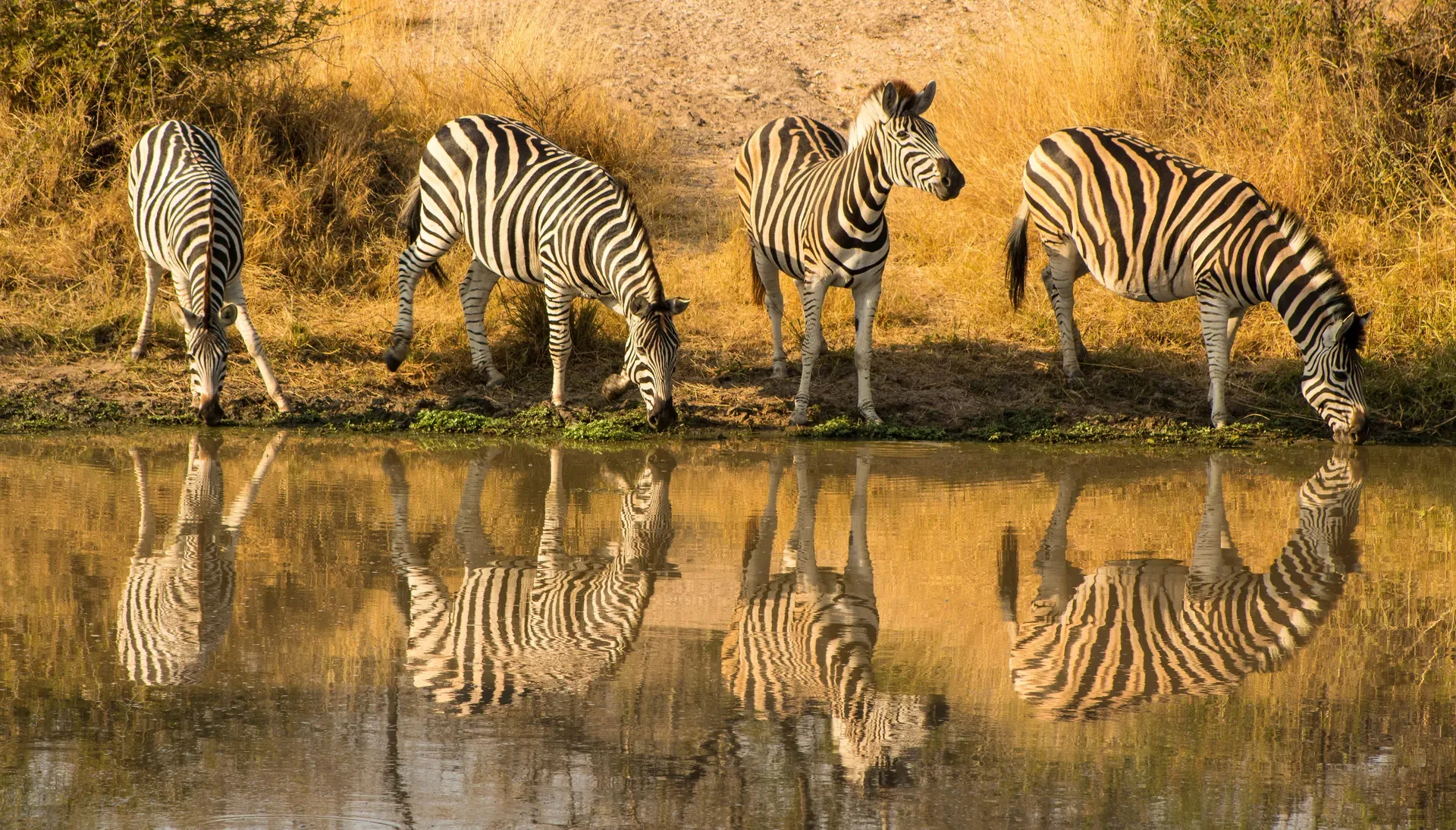
Kruger National Park is a 19,623-square-kilometer game reserve in northeastern South Africa. It holds roughly 17,000 elephants and 1,500 lions within a vast savanna and riverine landscape.
Kruger National Park covers 19,623 square kilometers of northeastern South Africa. It stretches 360 kilometers from the Crocodile River in the south to the Limpopo River in the north, and spans 65 kilometers from east to west. The reserve occupies parts of the Limpopo and Mpumalanga provinces, sharing an eastern border with Mozambique. Visitors drive their own vehicles or take guided open-safari trucks along a network of tarred and gravel roads.
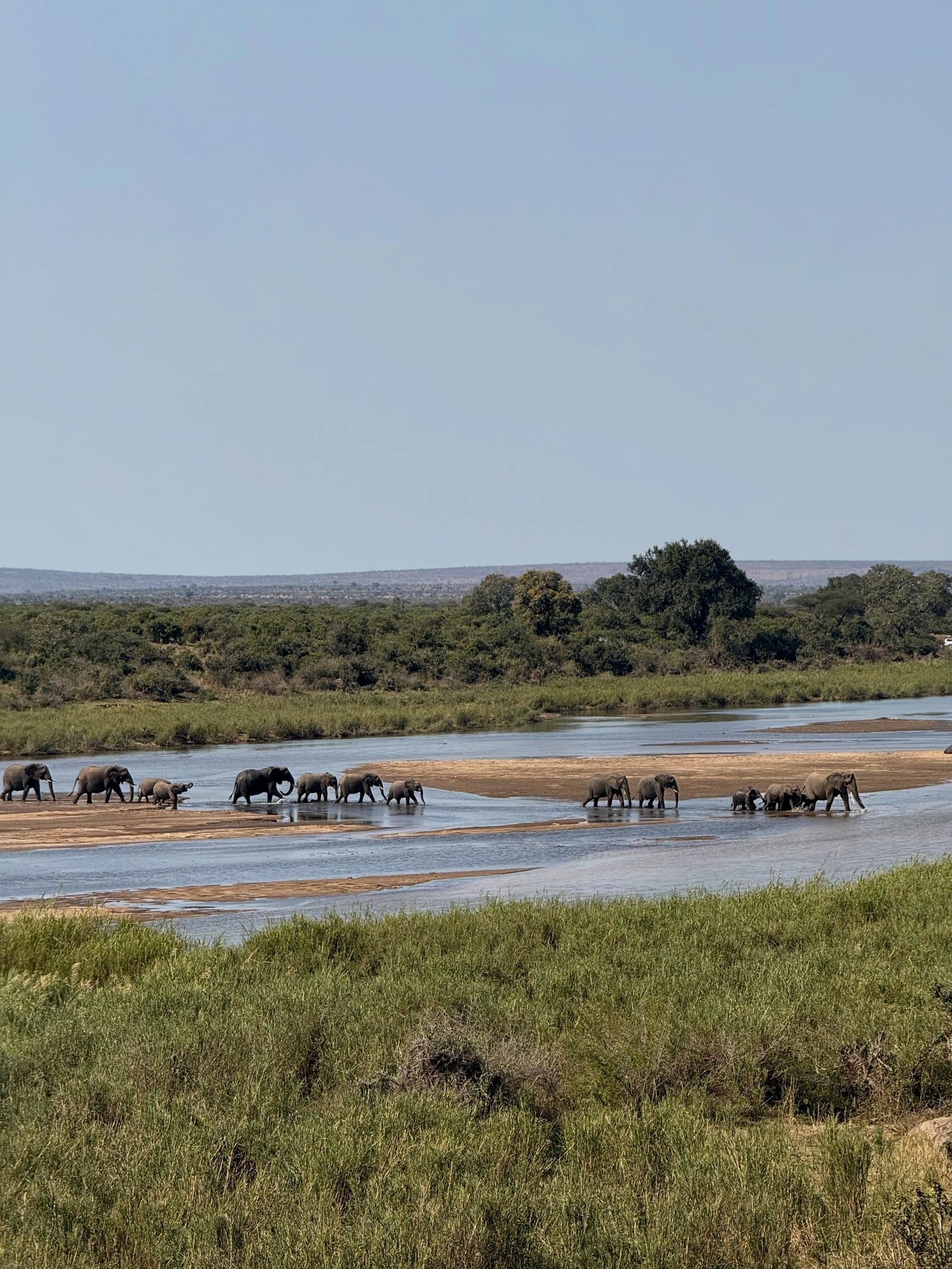
The park contains roughly 148 mammal species and 546 bird species. SANParks manages the area from its Skukuza headquarters, operating a system of fenced rest camps, bush lodges, and picnic sites. Roughly 17,000 elephants, 48,000 buffalo, 1,500 lions, and 1,000 leopards live within the boundaries. The landscape transitions from open grasslands in the central regions to mopane woodlands in the north and dense riverine forests along the major waterways. Kruger forms the core of the Kruger to Canyons UNESCO Biosphere Reserve. It also anchors the Great Limpopo Transfrontier Park. This 3.5-million-hectare conservation zone links South Africa, Mozambique, and Zimbabwe.
A worthwhile first visit requires three to four days to explore multiple camps. Keen wildlife watchers often stay a full week. The dry winter season from May to September offers the best game viewing conditions. Vegetation thins out during these months, and animals congregate at rivers and permanent waterholes. September brings milder mornings than midwinter. The wet summer season from November to March brings dense foliage that hides animals, high heat, humidity, and peak malaria risk. South African school holidays in December and January cause heavy crowding at camps and entrance gates. Skip the December rush if you have the choice.
International visitors pay a daily conservation fee of R602 per adult and R300 per child. South African citizens pay R134 per adult, while SADC nationals pay R275. Pre-booked day visits carry an additional non-refundable booking fee. Most international travelers arrive via a 4.5-hour drive from Johannesburg's OR Tambo International Airport to southern gates like Malelane or Phabeni. Airlink operates daily scheduled flights directly into Skukuza Airport. Eastgate Airport at Hoedspruit provides access to central camps like Orpen and Satara.
Paul Kruger, president of the South African Republic, proclaimed the Sabie Game Reserve on March 26, 1898. The government established this protected tract between the Sabie and Crocodile rivers to curb uncontrolled hunting by European settlers and prospectors. James Stevenson-Hamilton took over as the reserve's first warden in July 1902. He removed local inhabitants, banned hunting, and began the slow process of letting depleted wildlife populations recover.
The South African government passed the National Parks Act on May 31, 1926. This legislation merged the Sabie and Shingwedzi reserves to form Kruger National Park, establishing the country's first national park. The first tourist cars entered the reserve in 1927. Visitors paid a one-pound entry fee and slept in thorn-branch enclosures to protect themselves from predators. SANParks eventually took over management, building a network of permanent, fenced rest camps like Skukuza, Satara, and Letaba to accommodate overnight visitors safely.
In the late 20th century, conservation strategies shifted from strict isolation to regional integration. Fences along the western boundary dropped to incorporate private reserves like Sabi Sands. This allowed animals to follow historical migration routes. In 2002, the park became part of the Great Limpopo Transfrontier Park. This international treaty removed sections of the eastern border fence, allowing elephants and other species to move freely into Mozambique's Limpopo National Park. The Giriyondo Access Point now allows travelers to cross directly from Kruger into Mozambique.
Today, Kruger operates with strict visitor quotas and seasonal gate hours to manage traffic. Entrance gates open at 05:30 in the summer months and 06:00 in winter. All gates close between 17:30 and 18:30, depending on the season. You'll face a fine if you arrive at a gate after hours. Anti-poaching units patrol the borders to protect rhinos from organized syndicates. The park functions as a major research hub for savanna ecology, veterinary science, and elephant biology.
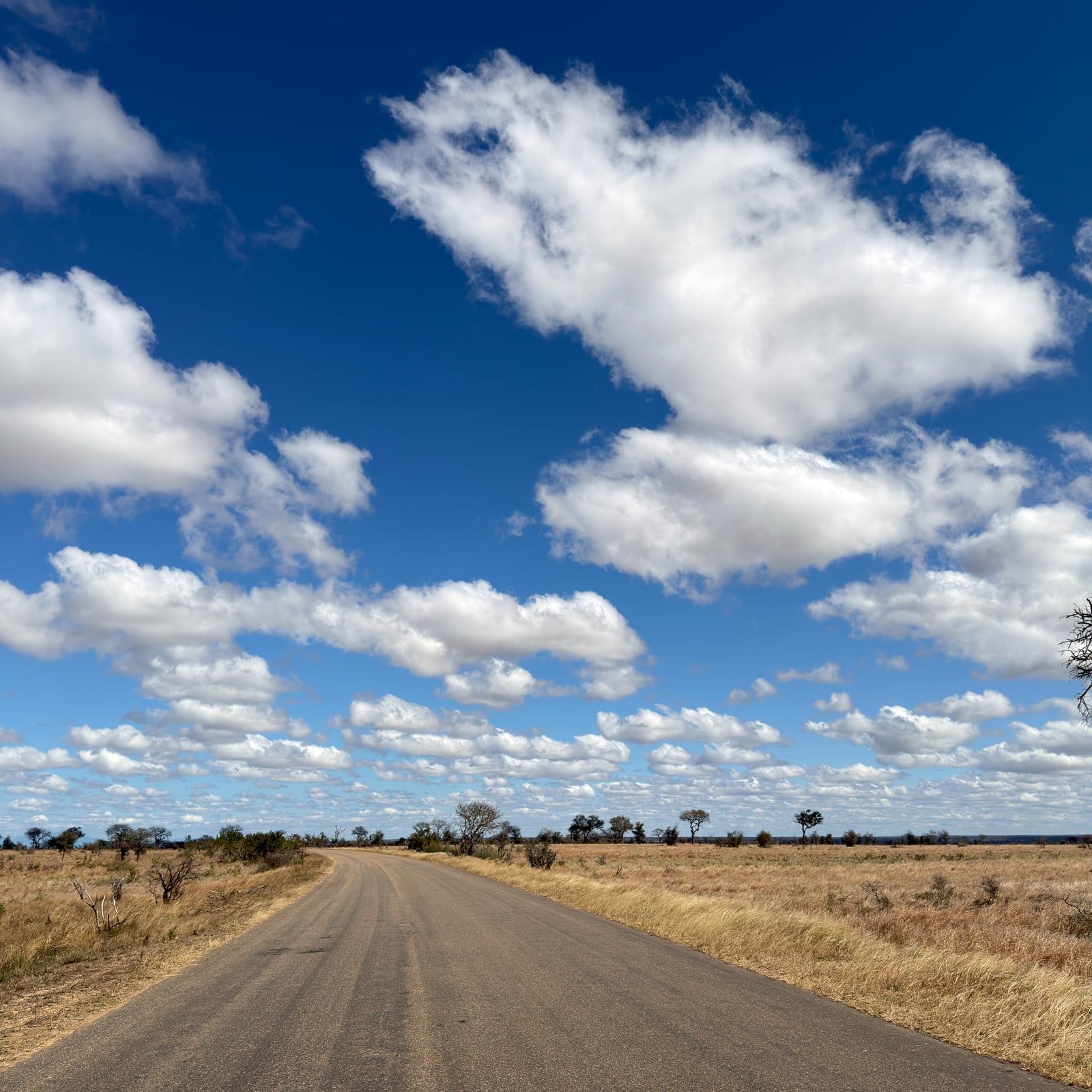
The park sits on a low-lying savanna plain bounded by the Lebombo Mountains, a rocky ridge along the eastern border with Mozambique. Five major river systems—the Crocodile, Sabie, Olifants, Letaba, and Limpopo—cut across the park from west to east. These waterways create dense strips of riverine forest dominated by sycamore figs, jackalberry trees, and fever trees.
The H4-1 road follows the Sabie River between Skukuza and Lower Sabie. This 43-kilometer route cuts through thick bush and provides frequent sightings of leopards, lions, and elephants. Animals move down to the river to drink at dawn, making early morning drives highly productive. Sunset Dam, located just outside Lower Sabie Rest Camp, holds dense populations of hippos and crocodiles. Visitors watch the activity from their cars parked on the dam wall. That's the spot to park at dusk.
Further north, the terrain flattens into open basalt plains around Satara Rest Camp. This central grassland supports large herds of zebra and wildebeest. Prides of up to 20 lions hunt in this open territory. Sunrise game drives departing from Satara offer the best chances of seeing these predators in action. Birdwatchers use the Ratel Pan and Sweni bird hides near Satara to view raptors and waterbirds. These hides sit 30 to 35 kilometers from the camp, offering quiet viewing away from the main traffic.
North of the Olifants River, the vegetation changes to stunted mopane woodland. This arid region supports fewer grazing animals but holds large concentrations of breeding elephant herds. The Letaba Elephant Hall museum at Letaba Rest Camp displays the massive tusks of the 'Magnificent Seven,' Kruger's largest recorded tuskers, alongside interpretive displays on elephant biology.
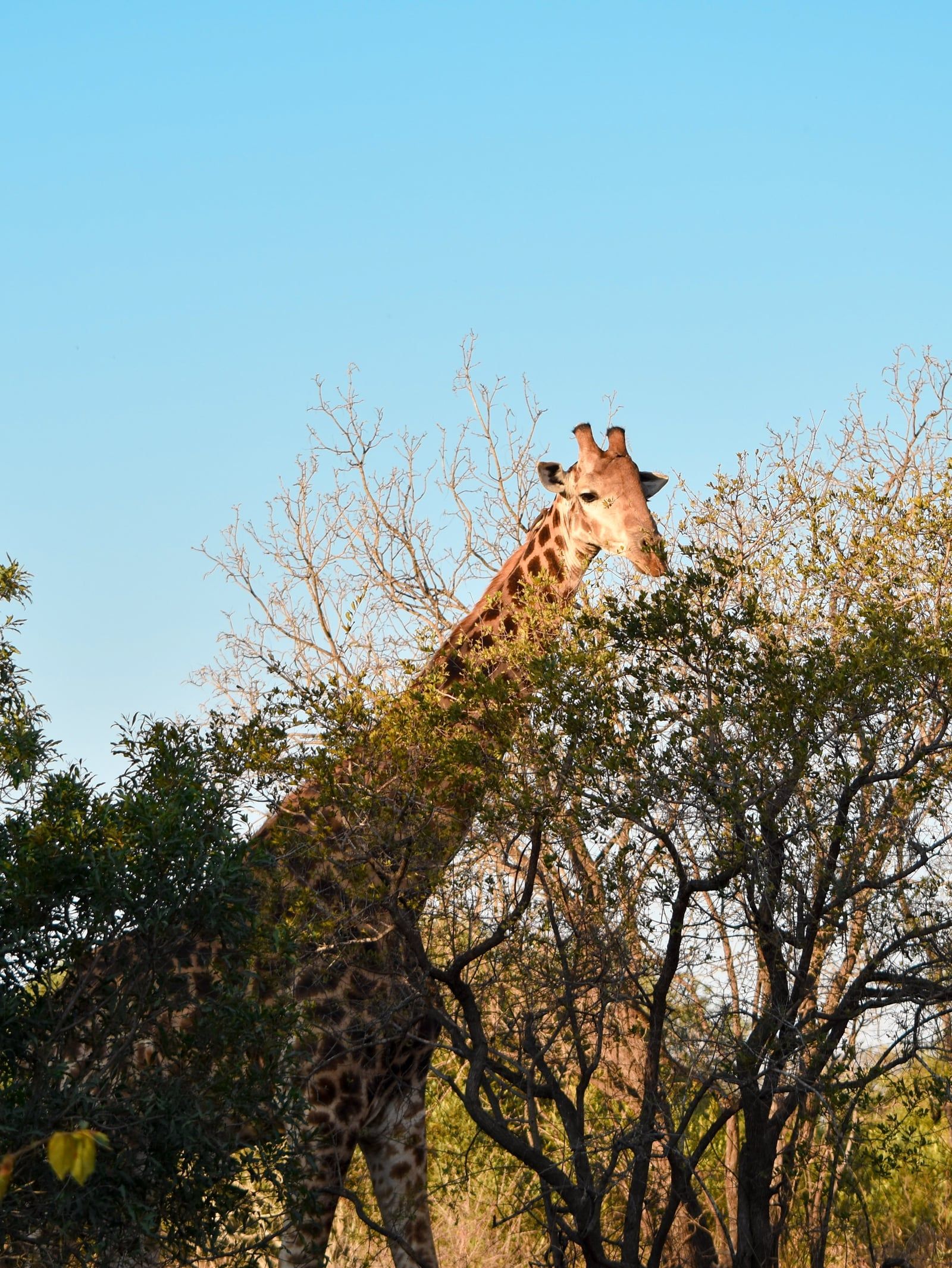
Visitors access these diverse biomes via a strict network of roads. The speed limit is 50 km/h on tar and 40 km/h on gravel. Speed traps operate regularly, and exceeding the limit results in a fine. Standard sedans handle the tourist roads easily. Four-wheel-drive vehicles are only required for specific designated routes like the 4x4 Eco Trails. For a closer look at the terrain, visitors book Wilderness Trails such as the Sweni or Olifants Trail. These three-night guided backpacking experiences depart midweek or on weekends from designated trail camps. Armed field guides lead small groups of up to eight people on foot to track spoor and encounter rhino, buffalo, or giraffe at close range. Pack neutral, muted-color clothing like khaki or olive for these walks. Bright colors attract insects and make wearers conspicuous to animals.
Human occupation in the Kruger area predates the park's conservation boundaries by centuries. The Thulamela archaeological site sits on a hilltop above the Luvuvhu River in the far north. This stone-walled royal citadel dates to the 16th century. Excavations here uncovered gold artifacts, glass beads, and iron tools. These artifacts link the settlement to ancient Indian Ocean trade routes. The finds prove that complex societies thrived in the Lowveld long before European contact. Visitors reach the ruins via a guided walk to see the reconstructed stone walls and learn about the region's Iron Age history.
San rock art appears in hundreds of rock shelters across the park. The highest concentration of these sites lies in the southwestern foothills near Berg-en-Dal Rest Camp. These paintings depict eland, rhebok, and human figures, recording the presence of hunter-gatherers in the landscape.
The park's creation involved the forced removal of local Tsonga and Makuleke communities. Wardens cleared the land to establish pristine wildlife zones, displacing thousands of people. In 1998, the Makuleke people won a land claim for the Pafuri region in the far north. Instead of resettling the land for agriculture, they chose to keep it within the park as a contractual concession. They now manage the area for eco-tourism, operating private lodges and retaining the financial benefits.
Today, the park incorporates cultural heritage into its daily operations. Camps such as Skukuza, Berg-en-Dal, and Lower Sabie run seasonal Kids Educational Programmes to teach younger visitors about local ecology and history. The Buffelsfontein Visitors Centre provides accessible exhibits on the park's human and natural timelines. Visitors must follow specific rules to respect the environment and the safety of the animals. Drones are strictly banned under the Protected Areas Act. Visitors may not feed or disturb animals, and no part of a person's body may protrude from a vehicle window or sunroof.
The Letaba Elephant Hall displays the massive tusks of Kruger's largest recorded elephants.
The speed limit is 50 km/h on tar roads and 40 km/h on gravel, enforced by active speed traps.
A waterhole near Lower Sabie holds dense populations of hippos and crocodiles just meters from the roadside.
Visitors can book three-night guided hikes through roadless zones with armed field guides.
Drones are strictly banned under the Protected Areas Act, and flying one carries heavy fines.
The park sits within a malaria zone, with the highest risk occurring during the wet summer months.
Thulamela, a 16th-century stone-walled site inside the park, yielded ancient gold artifacts and trade beads.
International visitors pay R602 per adult and R300 per child. South African citizens pay R134 per adult, while SADC nationals pay R275. Pre-booked day visits also carry a small non-refundable booking fee.
Entrance gates open at 05:30 in the summer months and 06:00 from April to September. All gates close between 17:30 and 18:30, depending on the season. You must be inside a camp or out of the park by closing time.
Yes. The park falls within a malaria zone. The risk is highest during the wet summer months from November to April, so consult a doctor about antimalarial prophylaxis before traveling.
The speed limit is 50 km/h on tarred roads, 40 km/h on gravel roads, and 20 km/h within rest camps. Speed traps operate regularly inside the park.
No. The use of drones is strictly prohibited under the National Environmental Management: Protected Areas Act. SANParks enforces this rule, and violations lead to confiscation and fines.
The park holds roughly 17,000 elephants, 48,000 buffalo, 1,500 lions, and 1,000 leopards. In total, it supports about 148 mammal species and 546 bird species.
The dry winter season from May to September offers the best conditions. Vegetation thins out, and animals congregate at rivers and permanent waterholes, making them easier to spot.
You can drive 390 to 420 kilometers from OR Tambo International Airport to the southern gates, which takes about 4.5 to 5.5 hours. Alternatively, Airlink operates daily direct flights from Johannesburg to Skukuza Airport inside the park.
No. A standard sedan is sufficient for the tarred and well-maintained gravel tourist roads. Four-wheel-drive vehicles are only required for specific designated 4x4 Eco Trails.
The area was first protected as the Sabie Game Reserve on March 26, 1898. It was formally proclaimed South Africa's first national park, and renamed Kruger National Park, on May 31, 1926.
Browse verified tours with free cancellation and instant confirmation.
Find Tours