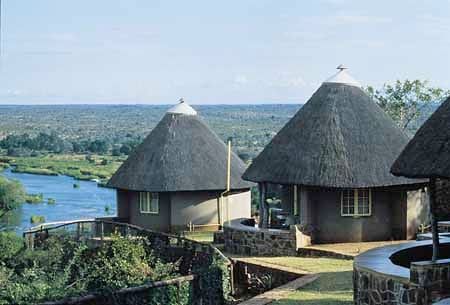
Two names dominate almost every African safari shortlist: Kruger and the Serengeti. One is a drive-yourself Big Five stronghold in South Africa. The other is Tanzania's migration theatre, a place where nearly two million hooves cross open grassland every year. Get the choice wrong and you either miss the river crossings you flew across the world for, or spend far more than you needed to for a trip that never required a fly-in camp.
Neither park is objectively better. They solve different problems. Kruger rewards travelers who want reliable, affordable, self-guided game viewing with rhino and leopard odds unmatched anywhere else on the continent. The Serengeti rewards those chasing one specific, time-bound spectacle and are happy to pay a guide to get them there. This guide compares both on the details that actually shape a booking decision: wildlife, migration timing, scenery, cost, access, and family safety.
Kruger vs Serengeti at a Glance
Kruger is South Africa's flagship reserve: a tarred-and-gravel road network you can drive yourself, rest camps from budget to plush, and the best rhino and leopard viewing in Africa. The Serengeti is Tanzania's open-plains stage for the Great Migration, best experienced from a guided vehicle or a hot-air balloon at dawn. Budget-conscious first-timers and families tend to land on Kruger; travelers chasing the migration, open horizons and full-service luxury tend to land on the Serengeti.
| Kruger National Park | Serengeti National Park | |
|---|---|---|
| Country / location | South Africa (Limpopo & Mpumalanga) | Northern Tanzania |
| Park size | 19,623 km² (7,576 sq mi) | About 14,750 km² (5,700 sq mi) |
| Big Five reliability | All five, including both rhino species, seen year-round | Four reliably; rhino rare and hard to find |
| Signature wildlife event | Year-round river and waterhole viewing | Great Migration river crossings, July-October |
| Typical daily cost (budget tier) | $150-250 per person | $250-400 per person |
| Typical touring style | Self-drive or guided | Guided, mostly fly-in |
Location, Size and How the Parks Are Structured
Kruger sits in South Africa's Limpopo and Mpumalanga provinces, running 360 km north to south and 65 km east to west along the borders of Mozambique and Zimbabwe. Its western boundary is unfenced against a string of private reserves — Sabi Sands, Timbavati and Balule — collectively known as Greater Kruger. Those private concessions allow off-road driving and night drives that the public national park doesn't, which is why serious leopard and lion trackers often book a night or two there alongside their Kruger tour.
The Serengeti occupies northern Tanzania and forms one continuous, unfenced ecosystem with Kenya's Masai Mara to the north and Ngorongoro Conservation Area to the south-east. Wildlife crosses that border freely; tourists need visas and separate park permits to follow. At roughly 14,750 km², the Serengeti is about a third smaller than Kruger, but its open terrain means longer unbroken sightlines and shorter effective driving distances between game concentrations.
Wildlife and the Big Five: Which Park Delivers More?
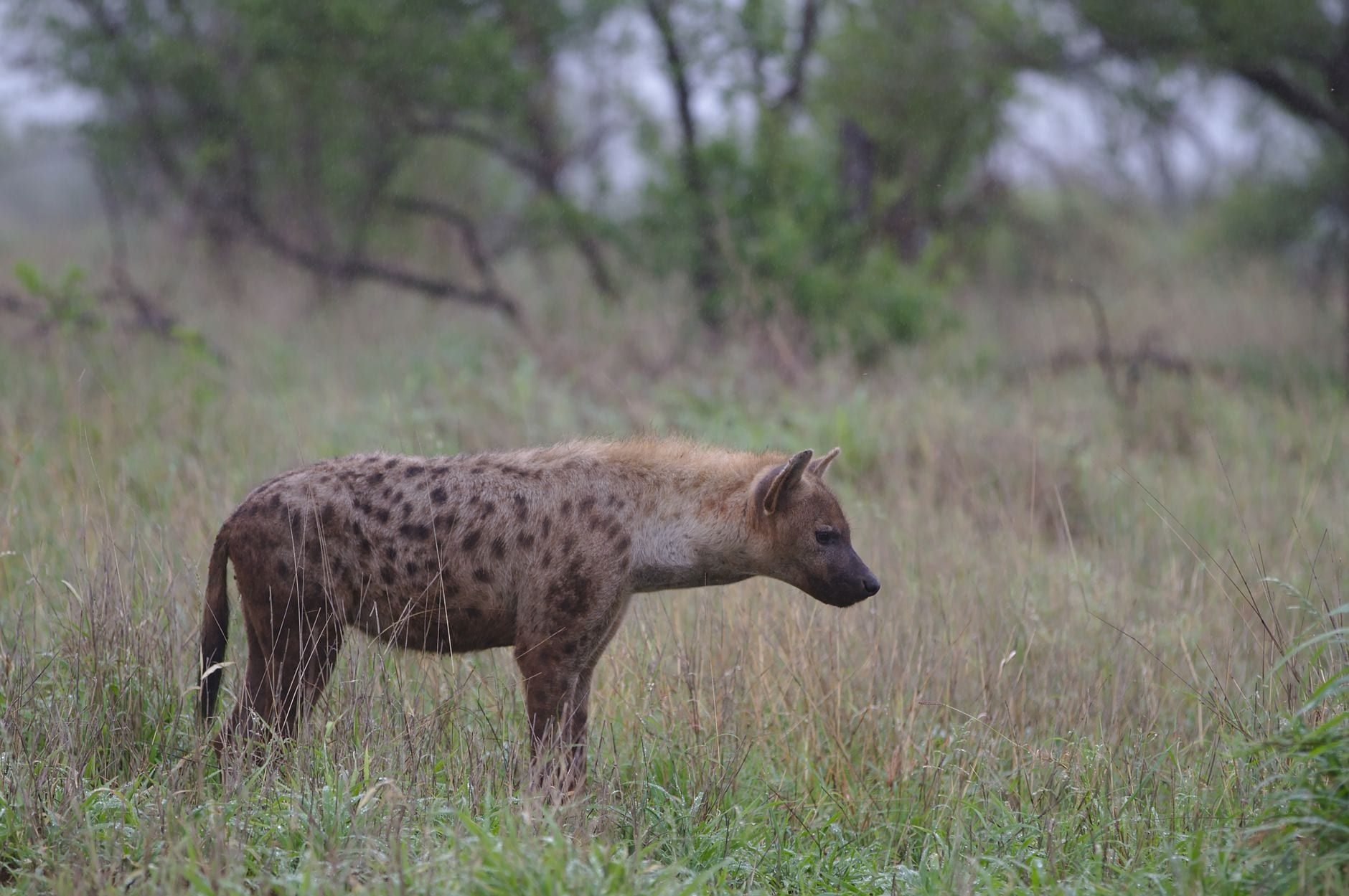
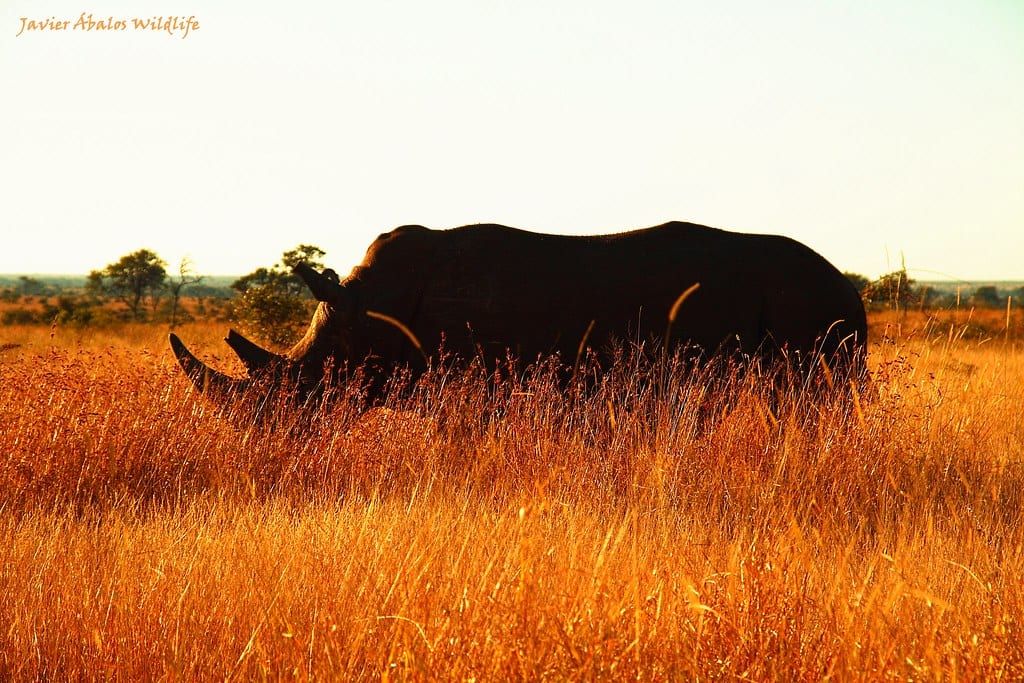
Kruger holds around 148 mammal species and 546 recorded bird species, with an estimated 1,500 lions, 17,000 elephants, 48,000 buffalo and 1,000 leopards. It's the only major African park with viable breeding populations of all five Big Five species, including both white and black rhino — a distinction that matters given how few parks anywhere still hold black rhino in meaningful numbers. Wild dog, an endangered predator many parks have lost entirely, is also more easily seen here than in the Serengeti. For a fuller species rundown, see our guide to Kruger's wildlife.
The Serengeti counts roughly 90 mammal species, fewer than Kruger, but its open plains support enormous herds and some of the highest lion densities on the continent. Cheetah do particularly well on its short grass. Rhino, though, are a weak point: Serengeti's population is small and often needs a specific permit to view, and black rhino are more reliably found in nearby Ngorongoro Crater instead. Leopard sightings are close to daily along Serengeti's Seronera River and Kruger's Sabie River alike, but Greater Kruger's Sabi Sands and MalaMala push that from likely to near-guaranteed. Birding is close between the two — both top 500 species — though Kruger's wetter season edges it ahead for sheer variety. Either way, a good guide on our wildlife-focused tours makes the difference between spotting a leopard and just hearing about one.
The Great Migration: Serengeti's Signature Event (and What Kruger Offers Instead)
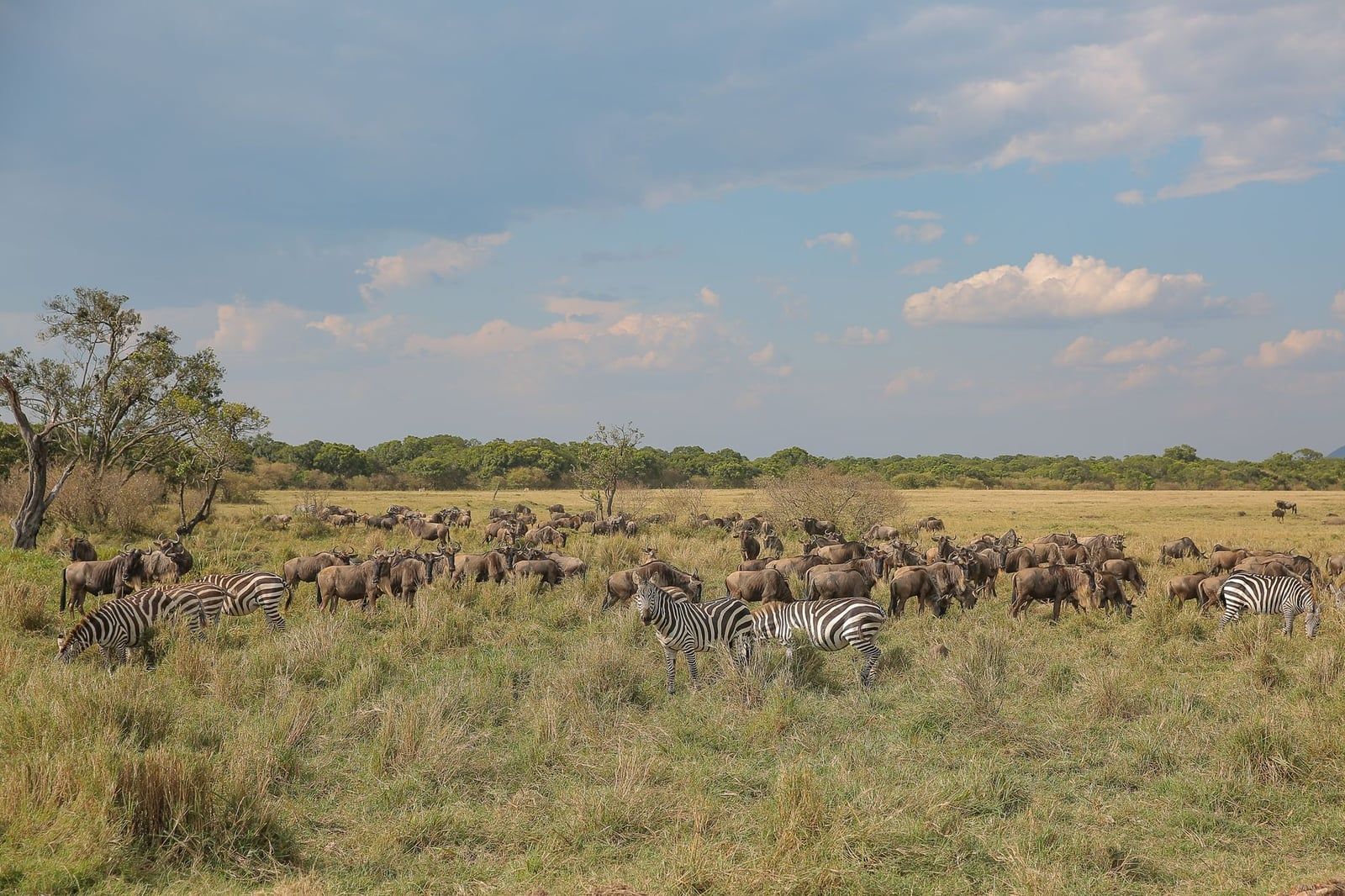
Close to two million wildebeest, zebra and gazelle move through the Serengeti-Mara ecosystem in a continuous loop, the largest overland animal migration on the planet. Mass calving happens on the southern plains in January and February, when hundreds of thousands of calves are born within a few weeks. By July the herds push north, and the dramatic, crocodile-infested Mara River crossings typically peak between August and September, sometimes stretching into October.
Kruger has no equivalent. There's no single herd movement to chase, no crossing to time your flights around. That's not really a weakness — it just changes what you're buying. Kruger trades one moving spectacle for consistent, year-round Big Five viewing that doesn't depend on being in the right spot on the right week. If your bucket-list image is a river full of wildebeest, only the Serengeti delivers it. If you'd rather book three months out and still see lion, elephant and rhino on demand, Kruger doesn't ask you to gamble on timing.
Scenery and Landscape
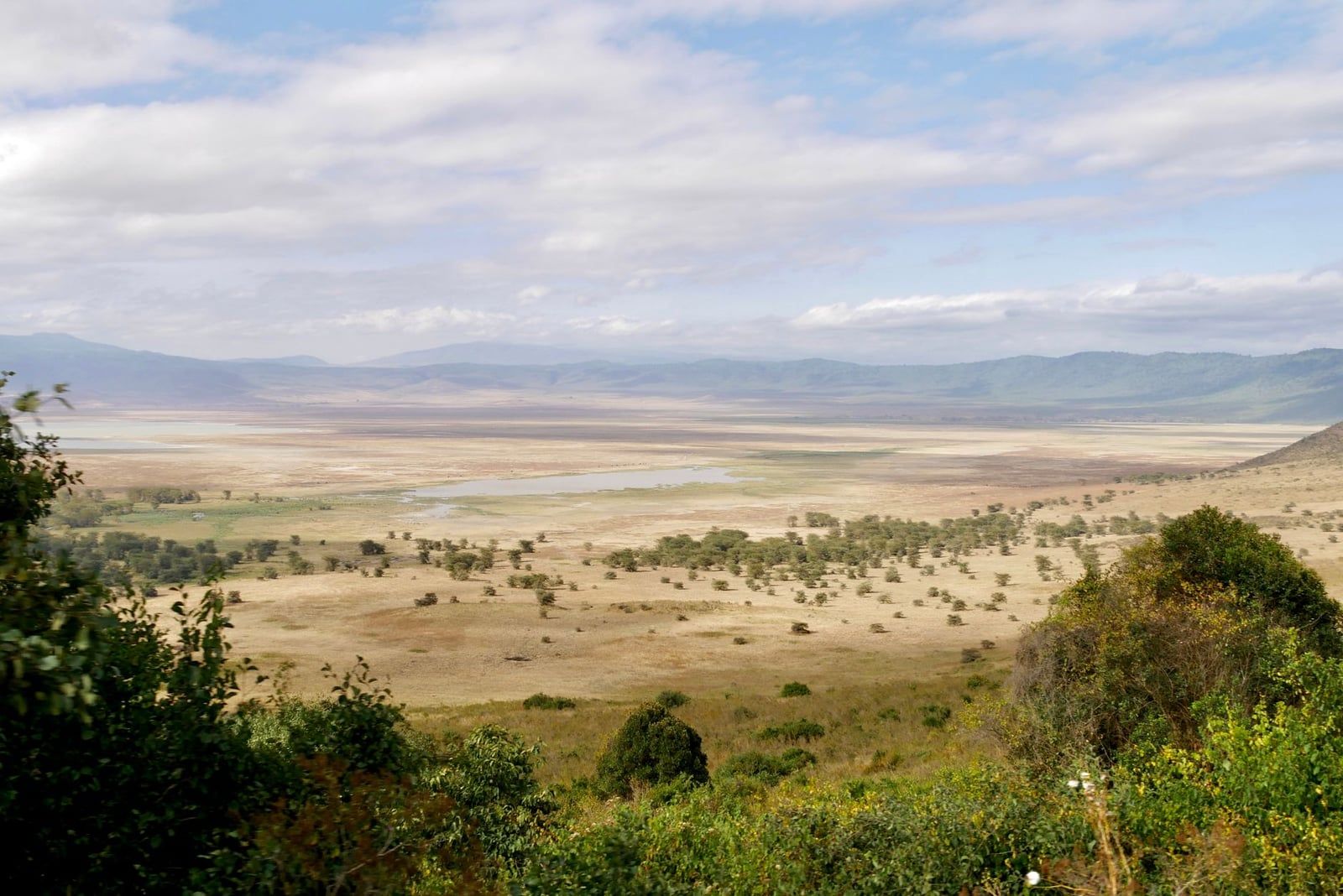
The Serengeti looks like the Africa of film and photography: rolling short-grass plains broken by granite kopjes, horizons that run uninterrupted for miles, and dawn hot-air balloon safaris drifting over herds below. It's the more cinematic of the two, and photographers chasing wide, empty skies usually prefer it. Kruger is denser and more intimate. Mopane woodland gives way to riverine forest along the Sabie and Olifants rivers, with granite koppies breaking up the bushveld. You're often watching animals emerge from cover rather than scanning them across open ground, which makes for closer, more textured sightings even if the views are less sweeping.
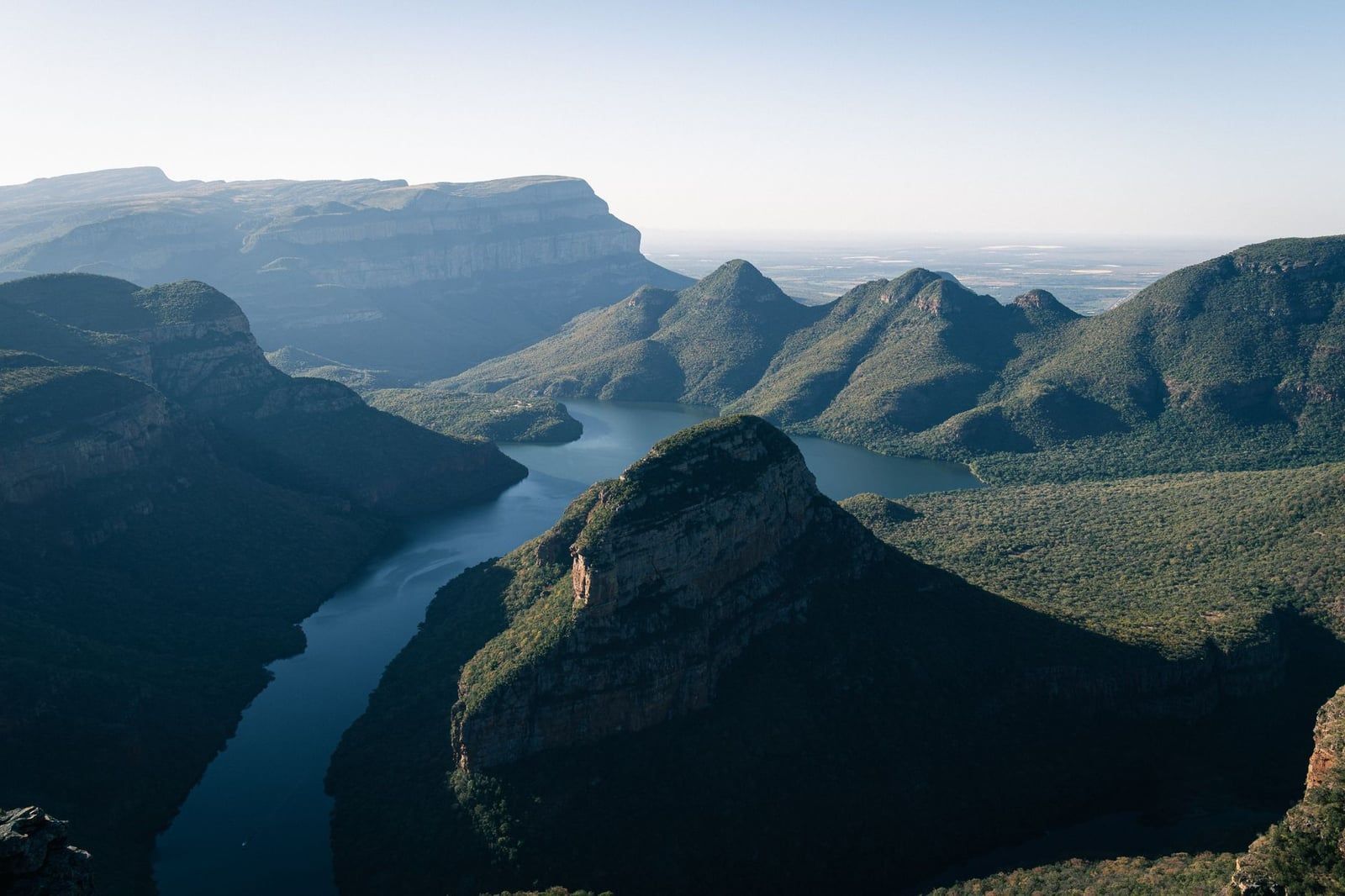
Both parks have scenic detours worth building a day around. West of Kruger, the Panorama Route runs past Blyde River Canyon, the world's third-largest gorge, along with viewpoints like God's Window. The drive into the Serengeti often passes through Ngorongoro Crater, the world's largest intact volcanic caldera, widely rated as one of the most scenic approach roads in Africa.
Best Time to Visit Each Park
Kruger's dry winter, roughly May through September, is the best window for game viewing: thinning vegetation and shrinking water sources push animals into the open around rivers and waterholes, and malaria risk drops. The wet summer, November through March or April, brings lush scenery, newborn animals and the park's best birding, but denser bush hides game and malaria risk climbs. Check current gate hours and fees before you travel, since both shift by month.
The Serengeti's dry season, June through October, is peak migration season, with the Mara River crossings drawing the heaviest crowds and the highest lodge rates. Its green season, November through May, brings the southern-plains calving in January and February and noticeably thinner crowds, though at the cost of muddier roads. Here's the twist: the two parks' calendars don't run in true opposition. Kruger's dry season and the Serengeti's migration peak actually overlap for several months, which matters if you're weighing a trip that touches both.
Cost Comparison: Which Safari Is More Affordable?
Kruger's official daily conservation fee for the 2025/26 season is R602 (about $33) per international adult and R300 (about $16) per child, though South African citizens and residents pay a fraction of that at R134 and R67. Serengeti's entrance fee runs closer to $60 per adult and $30 per child per day, almost double Kruger's international rate before you've even booked a guide or a bed.
That fee gap carries through the whole trip. A Kruger safari runs roughly $150-250 per person per day at the budget end, $250-400 mid-range, and $400 to $1,000-plus for top-tier private lodges. A Serengeti safari starts higher across the board: $250-400 budget, $400-650 mid-range, and $700 to $1,000-plus at the luxury tier. The gap comes down to logistics — bush-plane transfers, higher conservation fees, and a guided-only structure with almost no self-catering or self-drive option to cut costs. At the very top end, both destinations converge: an ultra-luxury week in Sabi Sands can cost about the same as one in the northern Serengeti.
| Tier | Kruger (per person/day) | Serengeti (per person/day) |
|---|---|---|
| Budget | $150-250 | $250-400 |
| Mid-range | $250-400 | $400-650 |
| Luxury | $400-1,000+ | $700-1,000+ |
Getting There, Self-Drive vs Guided, and Accommodation
Kruger is roughly 390-420 km from Johannesburg's OR Tambo International Airport, a 4.5 to 5.5 hour drive on the tarred N4 to gates like Malelane or Phabeni. A direct Airlink flight covers the same distance in about 45 minutes, landing at Skukuza Airport inside the park itself; Kruger Mpumalanga, Hoedspruit and Phalaborwa airports are the other main gateways. Once inside, Kruger's network of tarred and gravel roads (speed-limited to 50 km/h and 40 km/h) makes it one of the best self-drive parks in the world — no 4x4 required for the main tourist roads. Plenty of visitors still prefer a guided option; see our tours from Johannesburg if you'd rather not navigate gate times yourself.
Reaching the Serengeti usually means flying from Arusha or Kilimanjaro into a bush airstrip like Seronera or Grumeti, or enduring a long, rutted drive via Ngorongoro and Lake Manyara that demands a 4x4 and local knowledge. Self-driving is technically possible but genuinely not advisable for visitors unfamiliar with the terrain. Accommodation mirrors that guided structure: permanent lodges, tented camps and migration-following mobile camps, with almost no budget self-catering option. Kruger's range is wider by comparison — SANParks rest camps at the affordable end, mid-range lodges in between, and Sabi Sands' ultra-luxury camps at the top; our accommodation guide breaks down which camps suit which budget. One more practical difference: night drives and off-road tracking are routine in Greater Kruger's private reserves and offered as guided SANParks activities, but they're generally off-limits inside the Serengeti itself, where the balloon safari is the signature add-on instead.
Malaria, Family Travel and Crowds
Kruger sits within a malaria zone, though risk is low and manageable with prophylaxis and repellent, especially in the dry winter months. Families wary of malaria altogether can look at South Africa's malaria-free Big Five reserves, such as Madikwe or Pilanesberg, as an alternative. The Serengeti carries malaria risk year-round for every visitor, and its remoteness means the nearest serious medical care is farther away than it is in Kruger.
Kruger is broadly considered a safe, manageable destination for kids, provided they stay inside the vehicle at all times outside fenced areas — that rule is non-negotiable given how close game gets to the roads. Camps like Skukuza, Berg-en-Dal and Lower Sabie run seasonal kids' programs and have swimming pools, which helps on a multi-day self-drive. Crowds concentrate in Kruger's southern loops and busiest rest camps, especially during South African school holidays; heading to the quieter far north around Punda Maria, or basing yourself in a private Greater Kruger reserve, thins the traffic considerably. The Serengeti has its own pinch points — the Seronera area and the river-crossing sites during peak migration weeks get busy with vehicles jockeying for a view, so private conservancies on the ecosystem's edges are the equivalent workaround there.
Which Should You Choose — Or Should You Do Both?
Choose Kruger if this is your first safari, you're watching your budget, you want the freedom of driving yourself between sightings, or you're traveling with young kids. It's also the stronger pick if rhino and leopard, rather than sheer herd numbers, are what you came to see — our safari tour options cover most of the park's highlights without needing two weeks off work.
Choose the Serengeti if the Great Migration itself is the goal, you want a fully guided, fly-in trip without touching a steering wheel, and open-plains scenery and big-cat density matter more to you than keeping costs down. Doing both isn't a quick add-on — there's a long-haul flight between South Africa and Tanzania to factor in — but it's realistic as a longer multi-country trip, and a multi-day tour can be built around it. June through October is the sweet spot: it lines up Kruger's dry-season game viewing with the Serengeti's migration river crossings, so neither leg of the trip is a compromise.
Frequently asked questions
Is Kruger or Serengeti better for a first-time safari?
Kruger, for most first-timers. It's cheaper, self-drive friendly, and delivers reliable Big Five sightings without needing to time a migration or book a guide months in advance.
Is Kruger cheaper than the Serengeti?
Yes. Budget Kruger safaris run about $150-250 per person per day versus $250-400 in the Serengeti, with a similar gap at mid-range and luxury tiers, and Kruger's international entrance fee is roughly half the Serengeti's.
Can I self-drive in the Serengeti like I can in Kruger?
Technically yes, but it isn't recommended without serious 4x4 experience and local route knowledge. Kruger's tarred and gravel road network, by contrast, makes it one of the best self-drive parks in the world.
Does Kruger have a wildebeest migration like the Serengeti?
No. Kruger has no equivalent mass migration; instead it offers consistent, year-round Big Five and predator viewing, at its best during the dry winter months.
Which park has more rhinos, Kruger or Serengeti?
Kruger, by a wide margin. It holds the largest surviving breeding populations of both white and black rhino of any major African park, while Serengeti's rhino are rare and often need a special permit to see.
Can I visit both Kruger and the Serengeti on one trip?
Yes, though it requires a long-haul flight between South Africa and Tanzania. June through October is the best window, since it overlaps Kruger's dry season with the Serengeti's migration river crossings.
Is Kruger or Serengeti safer regarding malaria?
Kruger has low, manageable malaria risk, especially in the dry winter, and South Africa offers malaria-free alternatives like Madikwe. The Serengeti is a malaria area year-round requiring prophylaxis for every visitor.
Which is more scenic, Kruger or the Serengeti?
The Serengeti's open plains and kopjes are the more classically cinematic landscape. Kruger's river forests, mopane woodland and nearby Blyde River Canyon offer a denser, more varied scenery rather than sweeping vistas.